AfDB Unveils New African Financial Architecture with Landmark Abidjan Consensus
The African Development Bank Group has launched a bold new framework aimed at transforming how Africa finances its development, following a landmark consultative dialogue held in Abidjan.
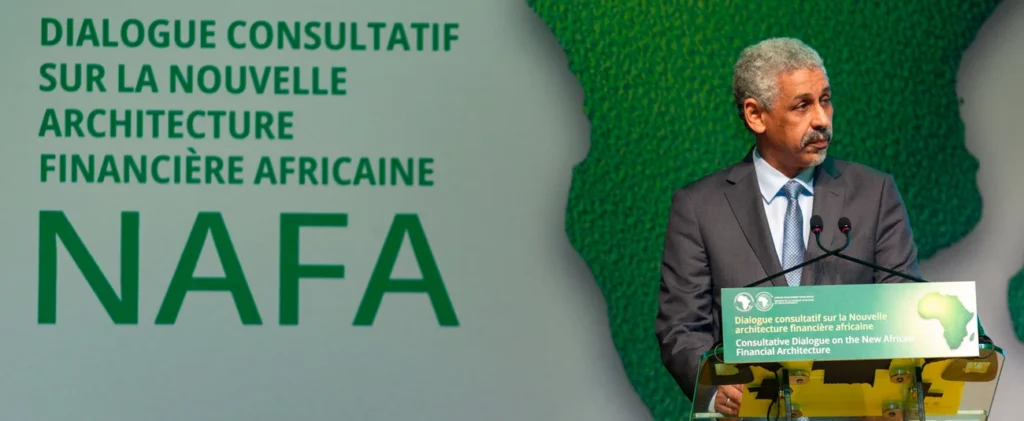
The high-level meeting, convened on 9 April 2026, culminated in the adoption of an 11-point “Abidjan Consensus” under the New African Financial Architecture for Development (NAFAD), a strategic initiative designed to address the continent’s estimated $400 billion annual development financing gap.
NAFAD seeks to tackle long-standing structural barriers that have limited Africa’s ability to mobilise and deploy capital at scale. Central to the agreement is a commitment to unlock Africa’s substantial domestic savings, estimated at approximately $4 trillion, and channel them into productive investments across the continent.
Speaking at the opening ceremony, Sidi Ould Tah emphasised the urgency of reforming the current financial system, describing it as “inadequate and not fit for purpose.” He noted that Africa’s challenge lies not in a shortage of capital, but in inefficient financial structures that hinder effective utilisation.
The dialogue brought together a broad spectrum of stakeholders, including central bank governors, development finance institutions, sovereign wealth funds and private sector actors. Participants engaged in nine thematic “Labs”, producing actionable frameworks, instruments and platforms to support the new financial architecture.
The event was held under the patronage of Alassane Ouattara, with the opening ceremony officiated by Prime Minister Robert Beugré Mambé. In his remarks, Mr Mambé highlighted the importance of building a fairer and more responsive global financial system aligned with contemporary economic realities.
Experts at the dialogue underscored the centrality of finance in achieving Africa’s long-term development ambitions, particularly those outlined in the African Union Agenda 2063. Economist Carlos Lopes noted that concessional finance, while useful, is insufficient to drive large-scale transformation across the continent.
The transition from the earlier NAFA framework to NAFAD signals a renewed determination among African financial leaders to build a more coordinated, resilient and self-sustaining financial ecosystem. The initiative also forms a core pillar of Dr Tah’s “Four Cardinal Points” strategic vision for the Bank Group.
The Abidjan Consensus, presented by Côte d’Ivoire’s Minister for Planning and Development Souleymane Diarrassouba, establishes a roadmap for ongoing coordination, annual reviews and implementation mechanisms to ensure sustained progress.
Dr Tah described the agreement as a historic turning point, stating that it “redefines the future of financing on our continent” by uniting Africa’s financial ecosystem around a shared vision for growth and development.
Read the full consensus here.