Zambia and Mauritius ICT Deal to Enhance Trade, Technology and Economic Opportunities
Zambia and Mauritius have reinforced their commitment to advancing Africa’s digital transformation following the successful hosting of the Mauritius–Zambia ICT Business Forum in Lusaka.
The forum, organised by the Economic Development Board of Mauritius in collaboration with the Zambia Development Agency and the Ministry of Technology and Science, brought together government officials, industry leaders, and ICT enterprises to explore partnerships, investment opportunities, and innovation.
The event featured business-to-business engagements involving eleven Mauritian private sector companies and their Zambian counterparts, aimed at fostering concrete deals and long-term collaboration.
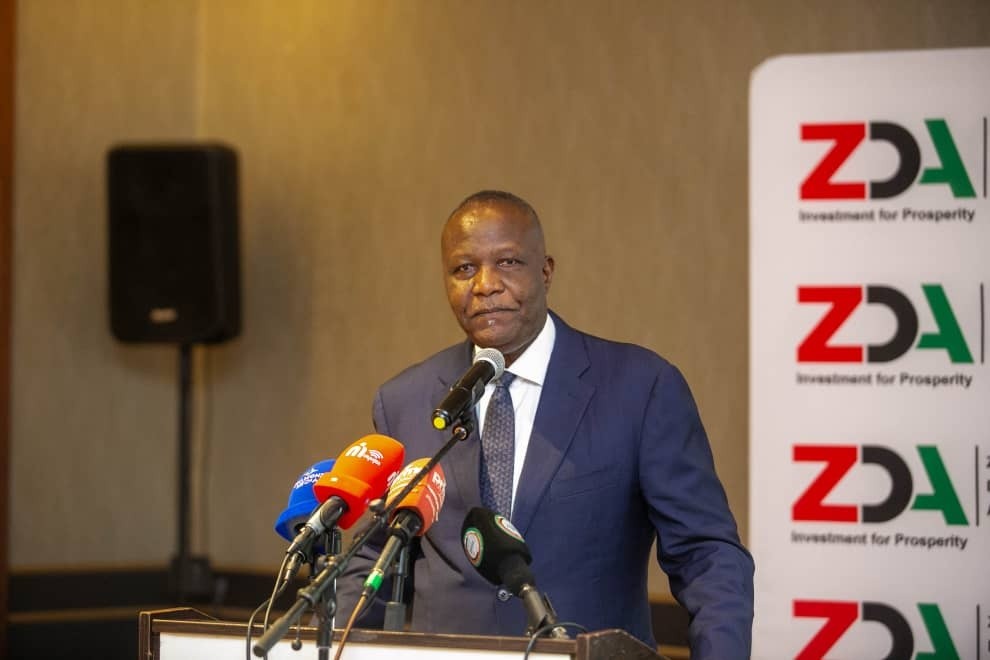
Officiating at the forum, Minister of Technology and Science Felix C Mutati emphasised the complementary strengths of Zambia and Mauritius in driving digital transformation across the continent. He highlighted Mauritius’ advanced capabilities in artificial intelligence, cybersecurity, and digital services as critical assets for regional growth.
Mr Mutati outlined Zambia’s digital transformation strategy anchored on five pillars: sector reforms, improved access and affordability of digital services, transition to integrated digital platforms, strengthened trust and cybersecurity, and enhanced collaboration—referred to as “Digital Ubuntu”.
He stressed that meaningful transformation must be driven by tangible investments rather than dialogue alone, urging stakeholders to translate engagements into actionable outcomes.
Permanent Secretary Brilliant Habeenzu reaffirmed Government’s commitment to digital transformation, describing it as central to Zambia’s development agenda. He noted that the country’s GDP has grown significantly in recent years, with the ICT sector playing a key role despite challenges such as the COVID-19 pandemic, drought, and debt pressures.
Dr Habeenzu emphasised the importance of partnerships, stating that no country can achieve digital transformation in isolation. He identified opportunities in artificial intelligence for agriculture, healthcare, and financial inclusion, as well as the expansion of e-government services and ethical deployment of emerging technologies.
Meanwhile, Nketani, Director at the Zambia Development Agency, highlighted Zambia’s strong investment climate, citing its ranking among Africa’s top investment destinations and its position as the continent’s second-largest copper producer. He also pointed to improved credit ratings, a stable political environment, and investor-friendly policies as key advantages.
He noted that Zambia’s ICT sector presents significant growth potential, with mobile penetration exceeding 100 per cent but internet usage still relatively low, creating opportunities in broadband expansion, fibre infrastructure, satellite connectivity, and digital platforms.
Mr Nketani further invited stakeholders to the Invest Zambia International Conference 2026, scheduled to take place in Lusaka from 15 to 17 July 2026.
The forum underscored Zambia’s strategic location at the heart of southern Africa, providing access to regional markets of over 600 million people through regional blocs, and its well-developed transport corridors linking to major seaports.
The Mauritius–Zambia ICT Business Forum is expected to strengthen cross-border collaboration, drive innovation, and unlock new economic opportunities, with a strong focus on converting partnerships into investments that support inclusive digital growth across Africa.