MPs Set for Extra Training Under New Parliamentary Institute
The Speaker of the National Assembly, Nelly B. K. Mutti, has officially launched the Institute for Parliamentary Studies and Training (iPST), describing it as a landmark initiative aimed at enhancing legislative effectiveness and democratic governance in Zambia.
The launch, held at Parliament Buildings, marks a significant step towards institutionalising continuous professional development for Members of Parliament, parliamentary staff and key stakeholders.
Speaking during the ceremony, Dr Mutti said the iPST would provide structured and ongoing training to strengthen Parliament’s oversight role and improve service delivery to citizens.
“Through the iPST, Members of Parliament will be properly inducted and capacitated. Committees will be strengthened in their oversight role, and staff will acquire the professional skills necessary to support a modern, responsive, and effective legislature,” she said.
She expressed confidence that the Institute would serve both current and future Parliaments, positioning it as a hub for research, innovation and knowledge in parliamentary affairs. She further urged legislators and staff to actively engage with its programmes.
Earlier, Acting Deputy Clerk (Administration), Sage Samuwika, said the Institute is designed to function as a centre of excellence dedicated to building intellectual and professional capacity within Parliament.
In remarks delivered on behalf of Education Minister Douglas Syakalima, the Ministry of Education commended the initiative as a strategic investment in human capital and democratic governance.
Several organisations and stakeholders also expressed support for the initiative. Munetra Kapachiso, representing Healthy Learners, reaffirmed the organisation’s commitment to parliamentary capacity-building, noting that the Institute would complement existing programmes such as the Zambia Parliamentary Caucus on School Health.
Meanwhile, Lungwangwa, representing Emeritus – United Parliamentarians in Africa for Democratic Governance, emphasised the need for ethical and competent leadership, describing the iPST as a critical tool for mentoring emerging leaders and promoting constitutionalism.
A representative of the Commonwealth Parliamentary Association Africa Region, Elufo, highlighted the importance of continuous professional development in responding to evolving governance demands and technological change, noting the Institute’s potential to become a regional centre of excellence.
Goodwill messages were also delivered virtually by Boemo Sekgoma and Tulia Ackson, who both underscored the regional and international significance of the initiative.
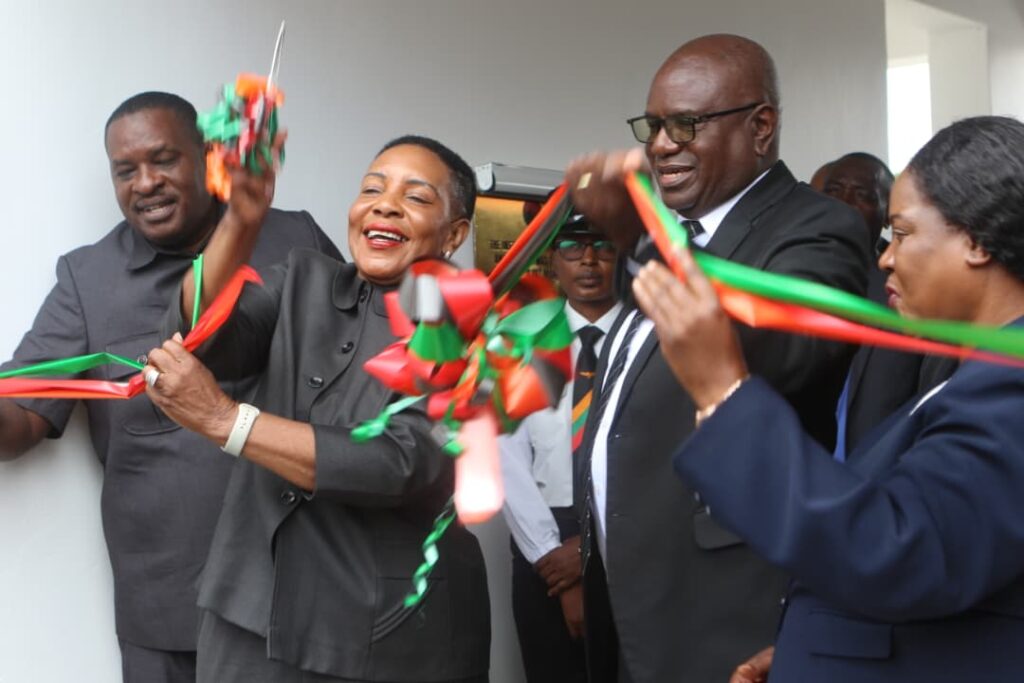
Following the official launch, Dr Mutti proceeded to the Institute’s premises in Mass Media, Lusaka, where she unveiled a commemorative plaque and cut the ribbon to mark the formal opening of the facility.
The event was attended by a cross-section of stakeholders, including former Speaker Patrick Matibini, Deputy Speakers Malungo Chisangano and Moses Frank Moyo, representatives from regional parliaments, government officials, and cooperating partners.
The launch of the iPST is expected to play a key role in strengthening Zambia’s parliamentary systems and advancing democratic governance through enhanced capacity and professionalism.