Zambia Hosts 8th AfriMAB General Assembly on Ecosystem-Friendly Technologies
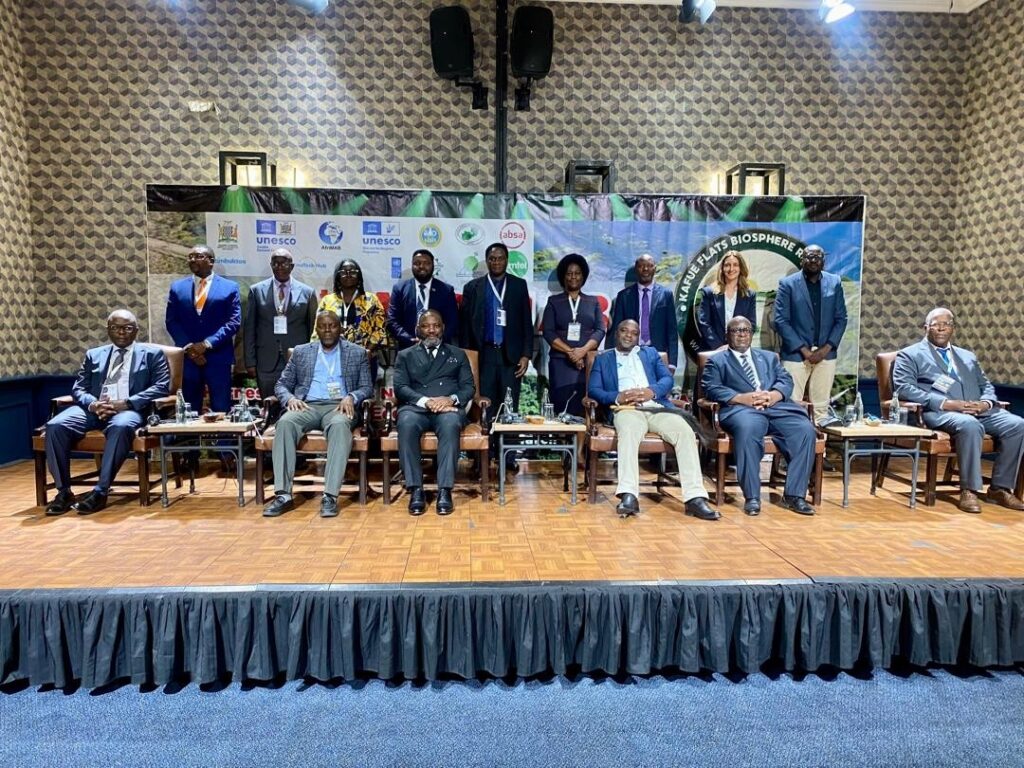
Zambia is hosting the 8th General Assembly of the African Network of Man and Biosphere Reserves (AfriMAB) from 9 to 13 March 2026 at the Avani Victoria Falls Resort in Livingstone, bringing together environmental experts, policymakers and development partners from across Africa.
The Assembly, organised by the Ministry of Technology and Science in collaboration with UNESCO, is being held under the theme “Harnessing Africa’s Natural Resources Through Ecosystem-Friendly Technologies.”
Delegates attending the meeting include representatives from national Man and Biosphere (MAB) committees, biosphere reserve managers, researchers, development partners and government officials, all seeking to strengthen cooperation on sustainable management of Africa’s natural resources.
Speaking during the official opening, Zambia’s Minister of Tourism, Rodney Sikumba, delivered a keynote address on behalf of the Minister of Technology and Science, Felix Mutati.
Mr Sikumba welcomed delegates to Zambia and expressed appreciation for the decision to host the Assembly in Livingstone, located near the world-renowned Victoria Falls, locally known as Mosi-oa-Tunya.
He said Zambia remains committed to protecting its natural heritage while promoting sustainable tourism and responsible resource management.
The Minister emphasised that effective environmental management requires close collaboration among government institutions, including the Ministry of Tourism, the Ministry of Green Economy and Environment and the Ministry of Technology and Science.
He noted that scientific innovation and coordinated policy frameworks are essential to balancing economic development with environmental protection.
Mr Sikumba said Africa’s rapidly growing population makes it increasingly important to adopt innovative approaches that support food production, sustainable land use and ecosystem conservation.
Among the priorities highlighted were the responsible use of natural resources, the adoption of ecosystem-friendly technologies and the strengthening of natural capital accounting to better understand the value of Africa’s environmental assets.
The Minister also pointed out that although renewable energy accounts for nearly 30 per cent of global electricity generation, Africa receives only about two per cent of global clean energy investment.
He further stressed the importance of digital technologies and artificial intelligence in improving environmental monitoring and strengthening evidence-based decision-making.
Mr Sikumba cited the Kafue Flats Biosphere Reserve as an example of Zambia’s commitment to sustainable resource management, noting that the reserve demonstrates how conservation efforts can support biodiversity while improving community livelihoods.
He also called for stronger regional cooperation and greater involvement of young people, describing Africa’s youth as a key driver of innovation in environmental protection.
Meanwhile, outgoing AfriMAB Bureau Chair, Telesphore Ngonga of Rwanda, commended the Zambian Government and the Zambia National Commission for UNESCO for hosting the Assembly.
Mr Ngonga said that since the 7th General Assembly held in Rwanda three years ago, the AfriMAB network has expanded its work from policy dialogue to practical ecosystem restoration initiatives across the continent.
These initiatives include support for the Great Green Wall in the Sahel region, restoration of mountain ecosystems in East Africa and mangrove rehabilitation along West Africa’s coastlines.
He said the network has also strengthened the integration of indigenous knowledge systems in conservation programmes and promoted cooperation among transboundary biosphere reserves.
However, he cautioned that challenges remain, including limited funding for conservation activities, security concerns in protected areas and increasing human-wildlife conflicts.
Also speaking at the Assembly, Cyprian Katongo outlined the importance of the UNESCO Man and the Biosphere Programme, which was established in 1971 to improve the relationship between people and their natural environment.
Professor Katongo noted that the global network of biosphere reserves now includes more than 780 sites in 136 countries, supporting nearly 300 million people while promoting biodiversity conservation and sustainable development.
He explained that Zambia’s Kafue Flats Biosphere Reserve, designated by UNESCO in 2022, covers approximately 2.6 million hectares and supports unique wildlife species, including the endemic Kafue lechwe.
Meanwhile, Moira Ng’uni, Senior Programme Officer for Communications at the Zambia National Commission for UNESCO, reaffirmed the Government’s commitment to responsible natural resource governance.
She said the country plans to expand its network of biosphere reserves by identifying additional ecological sites that can support biodiversity conservation and inclusive economic growth.
Ms Ng’uni also highlighted several initiatives being implemented through UNESCO partnerships, including youth communication programmes, community-based environmental awareness campaigns and projects aimed at strengthening climate resilience.