Women Farmers in Côte d’Ivoire See Income Growth Thanks to AfDB Support
In celebration of International Women’s Day 2026, the African Development Bank (AfDB) has highlighted its ongoing support for women farmers in Côte d’Ivoire, enabling them to enhance skills, access markets, and increase incomes.
The Bank’s Women-led Staple Food Cooperative Advisory Project, launched in 2022, targets 322 women-led cooperatives, reaching over 21,300 women to improve agricultural productivity and resilience to climate change.
The programme, funded through AfDB’s Affirmative Finance Action for Women in Africa (AFAWA) with an allocation of $1.5 million, has equipped more than 1,500 women with functional literacy training, helping them manage businesses more effectively and profitably.
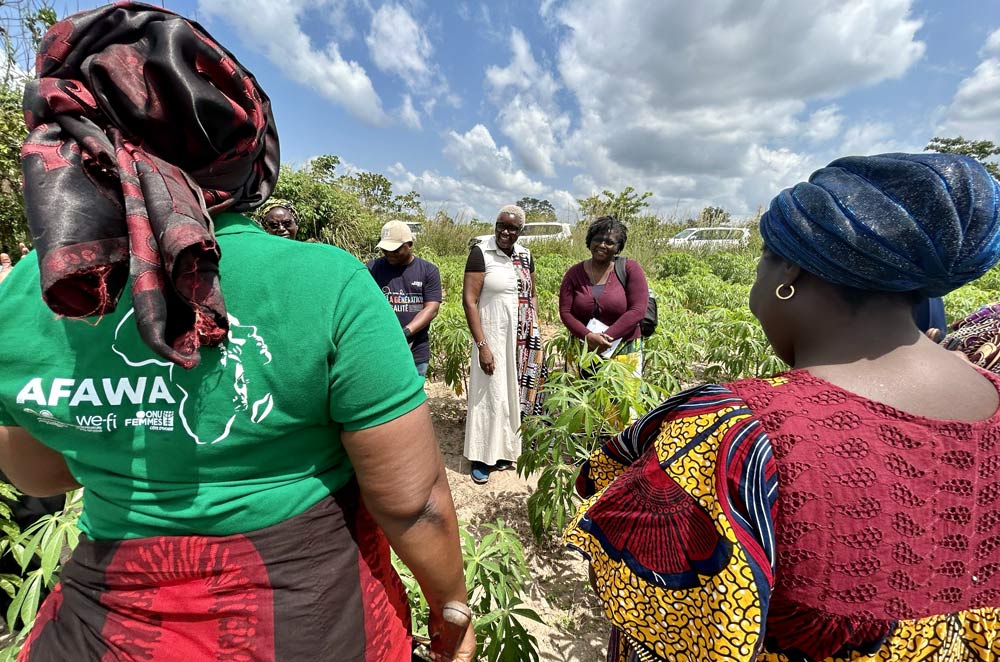
Dr Jemimah Njuki, AfDB Director for Gender, Women and Civil Society, led a delegation to Toumodi, central Côte d’Ivoire, where women farmers showcased thriving cassava crops cultivated using climate-smart farming techniques.
Speaking to the cooperative members, Dr Njuki said: “You are producing the food that Côte d’Ivoire is eating. You are processing the food that Côte d’Ivoire is eating – and our role at the Bank, in partnership with UN Women, is to support you.”
The programme also delivers specialised training in product packaging, labelling, cooperative governance, and management. An e-commerce platform, Blaatto, is being developed to connect women-led cooperatives with wider markets, helping them secure fair prices for their produce.
Cooperative leaders emphasised the impact of the programme on their livelihoods and families. Anastasie Kouadio, Chairperson of the Union Vivrière Etraikpa de Toumodi, said the training allowed women who could not read or write to understand financial accounting, manage their land better, and expand production.
Rose Jeannette Koffi, of the Les Moissonneuses federation, expressed eagerness to see the programme expand with machinery to boost productivity and ensure consistent food processing.
Dr Njuki noted that empowering women in agriculture is central to inclusive and sustainable development. “It is through women that our children are educated. It is through women that there is good nutrition. It is through the hard work of women that villages like this one thrive,” she said.
The initiative, implemented in partnership with UN Women, is part of AfDB’s broader efforts to foster gender-sensitive, resilient agricultural growth and promote economic empowerment for women across Africa.