STEM Development Puts Zambian Youth on the World Stage
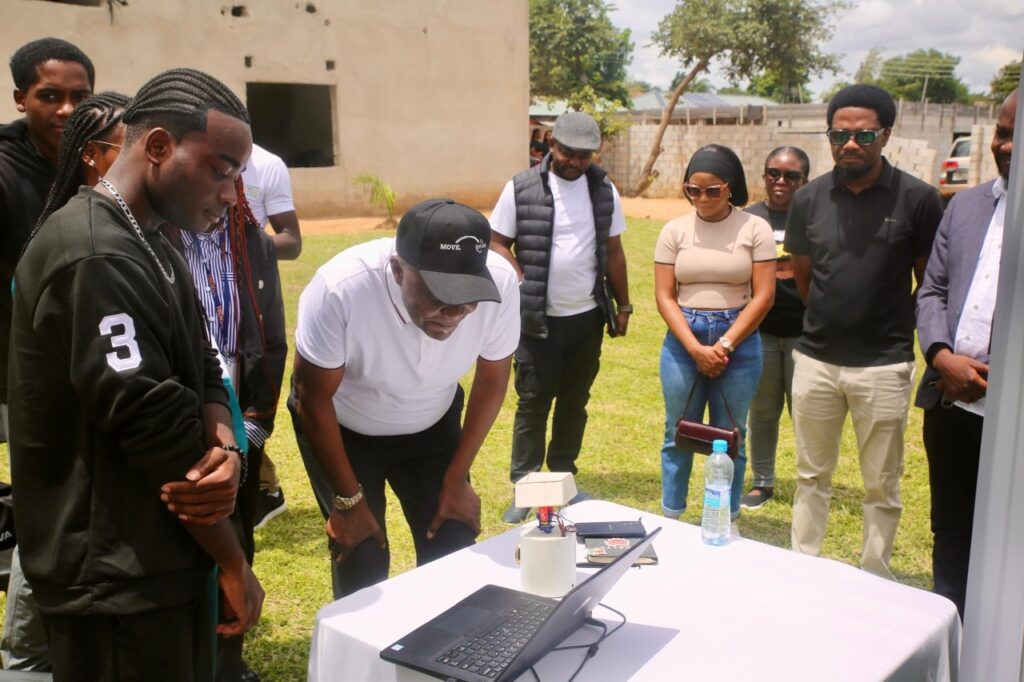
Zambia’s ambition to build a resilient, competitive knowledge economy received a major boost following a visit by the Minister of Technology and Science, Felix Chipota Mutati, to the Zambia National STEM Foundation hub currently under construction.
Describing the visit as both special and symbolic, the Minister said the moment celebrated innovation, resilience and possibility, values reflected in the journey of young innovator Rebecca Kaira.
He noted that her achievements demonstrate the transformative power of science, technology, engineering and mathematics (STEM), anchored in critical thinking, creativity and innovation.
According to the Minister, Rebecca’s story reinforces the message that background does not define potential. Her aspiration to study at institutions such as Massachusetts Institute of Technology illustrates that Zambian youth can compete confidently on the global stage.
Beyond individual success, the Minister stressed that the true impact of STEM lies in its ability to inspire other young people. Confidence, he said, is often the deciding factor between success and failure. In this regard, he invited Rebecca to motivate 50 Zambian students scheduled to travel to Geneva in May for international competitions, encouraging them to perform boldly on the world stage.
Reflecting on discussions with international partners, the Minister cited global examples of young innovators who leveraged STEM to develop advanced encryption and digital payment technologies, later building multi-billion-dollar enterprises. With the right support structures, he said, Zambian youth can achieve similar outcomes.
He emphasised that STEM development must be grounded in the spirit of Ubuntu collaboration, unity and shared responsibility. Students contribute intellectual capital, international partners provide diplomatic backing, the private sector offers professional expertise, while government supplies policy leadership and convening power.
Responding to an appeal from the Foundation’s Executive Director, Michelo Moonga, the Minister committed to mobilising partners and returning with practical solutions to support completion of the STEM hub.
The Minister also outlined government investments in digital infrastructure, noting that Zambia’s fibre-optic network has expanded from approximately 15,000 kilometres in 2021 to 45,000 kilometres today. The country is now connected to all eight neighbouring states and strategically positioned along major undersea cable routes.
This digital backbone, he said, is essential for research, innovation and global competitiveness, forming the foundation of Zambia’s emerging knowledge economy.
Technology and ICT, he added, are now among the fastest-growing contributors to national GDP, aligning directly with the objectives of the STEM Foundation and the country’s wider digital transformation agenda.
Meanwhile, Aidan Fitzpatrick, Ireland’s Ambassador to Zambia, commended the Foundation’s leadership and resilience. He said meeting the students was inspiring, particularly hearing a Grade 12 learner confidently express her ambition to study at MIT a signal, he noted, of Zambia’s rightful place in global innovation spaces.
The Ambassador praised the Foundation’s progress, highlighting that despite losing its previous premises, it has achieved around 65–70 per cent completion of the new hub within a year. He reaffirmed Ireland’s commitment to supporting STEM collaboration and youth empowerment initiatives.
Mr Moonga explained that the new hub was born out of necessity after the Foundation lost its rented premises due to a property sale. Determined to secure a sustainable future, he and his wife converted planned residential apartments into a permanent STEM innovation hub, with construction commencing in May last year.
The facility is currently about 65 per cent complete and requires approximately US$150,000 to be fully operational before the end of the year. Planned features include innovation and incubation spaces, reception facilities, an ablution block and event support areas.
The Foundation is also launching initiatives such as STEM Radio and a global health innovation programme focused on workplace mental wellbeing, including an AI-supported mobile application.
Rebecca Kaira, an innovator incubated by the Foundation, shared her journey in developing STEAM Harvest, a mobile application supporting farmers with climate updates and market information, while also helping students prepare for examinations in core science subjects. Her work has earned international recognition, including awards and participation in programmes across Africa and the United States.
Rebecca and her team are now preparing to represent Zambia at the International Dream Reach Competition in London, where they will showcase their robotic and digital innovations.