From Groundnuts to Growth: A Farmer’s Journey to Success
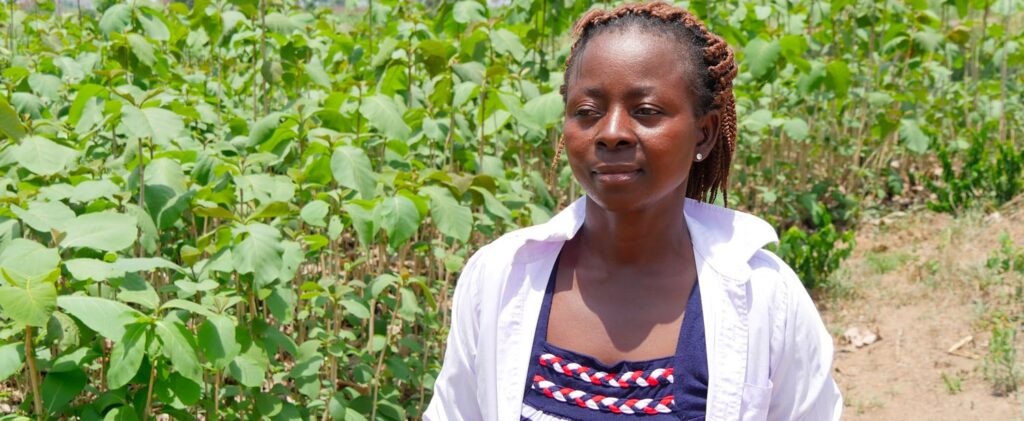
In Zakpalsi community in the Mion District of Ghana’s Northern Region, 47-year-old Azara Imoro is redefining what success in agriculture looks like for women with no formal education.
For years, Azara cultivated just four-fifths of a hectare of groundnuts, earning about GH₵1,500 per season. Despite supplementing her income by helping other farmers during harvest, she remained financially dependent on her husband. Her dream of expanding into maize farming felt unattainable due to the high cost of fertiliser and quality inputs.
“I always wanted to farm maize, but it was impossible,” Azara recalls. “I could only afford groundnuts using seeds saved from previous harvests.”
Like many smallholder farmers in the Savannah belt, Azara faced erratic rainfall, limited access to quality seeds and prohibitively expensive inputs. Although she received advice from agricultural extension officers, she lacked the resources to apply many recommended practices. Her harvests reflected both these constraints and her untapped potential.
Everything changed in 2023 when Azara joined the Savannah Agriculture Value Chain Development Project (SADEP), which she learned about through radio and television programmes. She was later linked to Asimbeya Farms, a commercial farming enterprise participating in the project.
“It was a dream come true,” she says. “I could finally farm maize.”
Through this partnership, Azara received support to cultivate 1.6 hectares of maize alongside her groundnut farm. The assistance included improved maize seeds, fertilisers and agrochemicals, mechanisation services for land preparation and harvesting, training in good agricultural practices, and access to reliable buyers. Flexible payment terms, requiring only 50 per cent upfront with the balance settled after harvest, removed the financial barriers that had constrained her for years.
She also continued receiving support for groundnut production from organisations such as Urbanet and MEDA, while maintaining access to extension services.
For the first time, Azara achieved financial independence. She now contributes significantly to household expenses and her children’s education. Her success has also earned her respect within the community, where she has become a source of inspiration and guidance for other women farmers.
Azara’s journey underscores SADEP’s inclusive approach. Rather than focusing solely on educated farmers or those with capital, the project works through commercial farmers to reach smallholders regardless of education or wealth, ensuring women like Azara are not left behind.
“I may not have gone to school,” Azara says, “but now I am teaching my daughters that women can farm successfully and provide for their families. That is the education that matters.”
Today, Azara Imoro is no longer struggling from season to season. She is an empowered agricultural producer, a community role model, and living proof that inclusive agricultural development can transform rural lives.