Zambia Records Stronger Growth and Concludes IMF Programme as Economy Stabilises
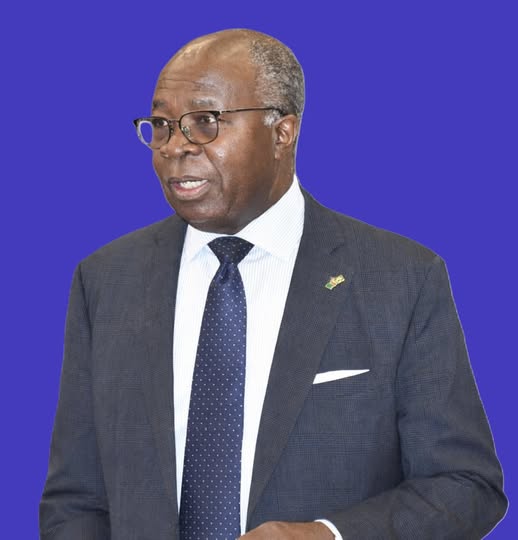
Zambia’s economy has shown clear signs of stabilisation and recovery, with growth accelerating, inflation easing and the Kwacha strengthening, Finance and National Planning Minister Situmbeko Musokotwane has told Parliament.
Presenting a ministerial statement on the state of the economy and the International Monetary Fund (IMF) Extended Credit Facility (ECF) Programme, Dr Musokotwane said the country was now pivoting from stabilisation towards growth, investment and job creation following years of economic distress.
He recalled that when the New Dawn Administration assumed office in 2021, Zambia faced severe debt distress, high inflation, exchange-rate instability, low foreign reserves and weakened investor confidence. Since then, Government reforms aimed at restoring credibility and macroeconomic stability have begun to yield tangible results, particularly in 2025 and early 2026.
Preliminary figures show that gross domestic product (GDP) growth accelerated to 5.2 per cent in 2025, up from 3.8 per cent in 2024. The improvement was driven largely by a rebound in agriculture, higher mining output and continued expansion in the information and communications technology (ICT) sector.
Copper production increased by 7.8 per cent to about 890,346 metric tonnes in 2025, supported by higher output from major mining operations, while maize production reached a bumper harvest of 3.66 million metric tonnes, strengthening food security and easing food price pressures.
On price stability, Dr Musokotwane reported that inflation fell to 11.2 per cent by the end of 2025, down from an average of 15 per cent in 2024. Inflation returned to single digits in January 2026 at 9.4 per cent, the first such outcome since early 2024. Over the same period, the Kwacha appreciated by more than 21 per cent in 2025 and strengthened further in January 2026, buoyed by stronger foreign exchange inflows and renewed investor confidence.
The Minister also highlighted progress in the energy sector, where reforms such as the Electricity Open Access Framework, net metering and a streamlined licensing system have encouraged private sector participation. Electricity generation rose by 7.8 per cent in 2025, supported by additional solar and thermal power.
On public finances, total revenues and grants in 2025 reached K187.85 billion, exceeding the target, while expenditure was contained below projections at K223.73 billion. As a result, the budget deficit narrowed to 3.4 per cent of GDP, outperforming the projected 4.6 per cent.
Dr Musokotwane said disciplined spending had helped protect priority areas such as social protection, free education and infrastructure investment.
As at the end of December 2025, Zambia’s total public sector debt stood at US$28.9 billion, comprising external and domestic obligations. The Minister said domestic borrowing remained in line with the Parliament-approved Annual Borrowing Plan.
Externally, the current account deficit narrowed sharply to US$25.1 million, while gross international reserves rose to US$5.5 billion, equivalent to 5.2 months of import cover, strengthening the country’s resilience to external shocks.
Dr Musokotwane confirmed that Zambia had successfully concluded its 38-month IMF ECF programme, which began in August 2022, triggering an immediate disbursement of US$190 million and bringing total programme support to US$1.7 billion. He said Government would not seek an extension, but would instead engage the IMF on a successor programme focused on growth, investment, job creation and expanding productive capacity.
He cited key achievements under the programme, including improved fiscal discipline, significant progress in external debt restructuring, stronger investor confidence and enhanced public financial management.
Concluding his statement, the Minister emphasised that Zambia’s transition to growth would be anchored in discipline, transparency and accountability, particularly in public borrowing. He said Government would continue to rely on Parliament-approved borrowing plans to ensure that new debt supports national priorities and delivers tangible benefits to citizens.
“Our goal is a stable, productive and inclusive economy, where the gains from stability are felt in every community,” Dr Musokotwane said.