First Quantum’s School Feeding Programme Transforms Education in Solwezi
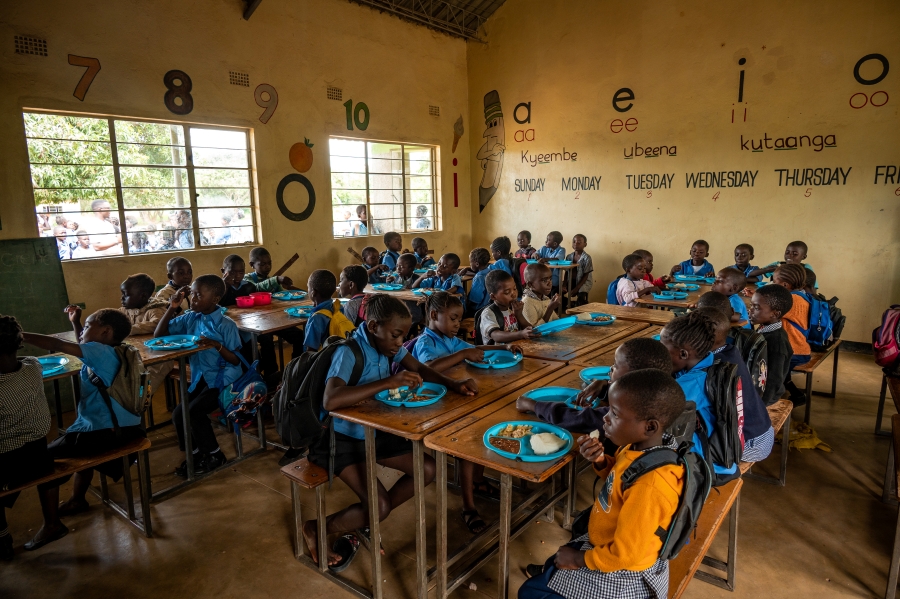
As First Quantum celebrates 30 years of mining excellence in Zambia, its legacy extends far beyond copper production. In the communities surrounding the Kansanshi Mine, the company’s school feeding programme has been providing hot, nutritious porridge to around 7,000 pupils across 35 schools each day for the past six years.
Recognising that hunger hinders a child’s ability to concentrate and excel academically, the programme goes beyond simply serving meals. Through its Homegrown School Feeding initiative, 40 schools receive farming inputs such as seeds and fertiliser, enabling them to grow crops that supplement the meals and bolster food security for pupils.
Launched in 2019 in response to a National Nutrition Commission report showing that over 25% of children in Solwezi District were stunted due to malnutrition, the programme aligns with the government’s Home Grown School Feeding Programme (HGSFP). It has since become a lifeline for rural education, tackling malnutrition, absenteeism, and poverty, while providing children with a sense of support and inclusion.
“We know that when a child is hungry, they cannot focus, and absenteeism is often high,” explains First Quantum Kansanshi Foundation’s Head of Education, Dr Sylvia Mwanza-Kabaghe. “To keep pupils in school, we introduced this feeding programme in our communities.”
The impact of the Homegrown School Feeding initiative is evident at schools such as Kyantobo Primary, where many children walk long distances to attend classes.
“The learners can stay in school longer and focus better,” says Dr Mwanza-Kabaghe.
Before the programme, teachers watched helplessly as pupils fell behind or dropped out due to fatigue and hunger. Head Teacher Mr Cliff Lufunda recalls the challenges of those mornings.
“Some pupils walked long distances and were discouraged from attending because they were hungry,” he says. “They often waited for siblings or friends to walk home together.”
Since meals were introduced, the story has changed. Enrolment at Kyantobo rose from 293 pupils in 2025 to 323 in 2026, while academic results have improved significantly.
“We achieved a 97% pass rate: out of 29 Grade 7 candidates, only one failed,” Mr Lufunda adds. “Even during the rainy season, when parents previously kept children at home to work in the fields, pupils now attend school because they know they will be fed and can fully participate in lessons.”
Mbonge Primary School reflects similar progress, with its student population growing from 840 in 2025 to 950 in 2026. Head Teacher Mrs Taima Moddy highlights the importance of feeding pupils who come from vulnerable homes.
“When children have energy in class, their performance improves significantly compared to those who are hungry,” she says.
A unique feature of the programme is its focus on sustainability. By providing seeds and fertiliser to schools, First Quantum enables them to grow crops that supplement the porridge while also serving as practical learning tools for students and their families.
“We want pupils to gain skills and ensure the programme is sustainable,” says Kansanshi Foundation Education Advisor Ms Bertha Kajoba.
At Mbonge, the approach is already paying off. The school recently harvested 18 bags of maize and 18 bags of shelled groundnuts, allowing the feeding programme to expand from Early Childhood Education to Grade 7.
“Kansanshi provides porridge for the younger pupils, but the inputs let us support all learners with the crops we harvest,” Mrs Moddy notes. “We appeal to other well-wishers to join us, as these are our children, some of whom are orphans or come from vulnerable backgrounds.”
Parental involvement is crucial to the programme’s success. To prevent teachers from being distracted from lessons, communities organise a rotating cooking roster led by local group leaders.
Lilian Mukabela, a volunteer at Mbonge, says the initiative brings peace of mind.
“As a parent, cooking for the children is rewarding. I know my child is eating, which helps them succeed in school,” she explains.
Another parent, Joseph Kangowanyi, who collects his children from Kyantobo, praises the initiative.
“My three children can read and write thanks to the teachers and the mine. We hope the school continues to expand as more children now attend,” he says.