African Leaders Urge Urgent Action as Malaria Funding and Progress Stall
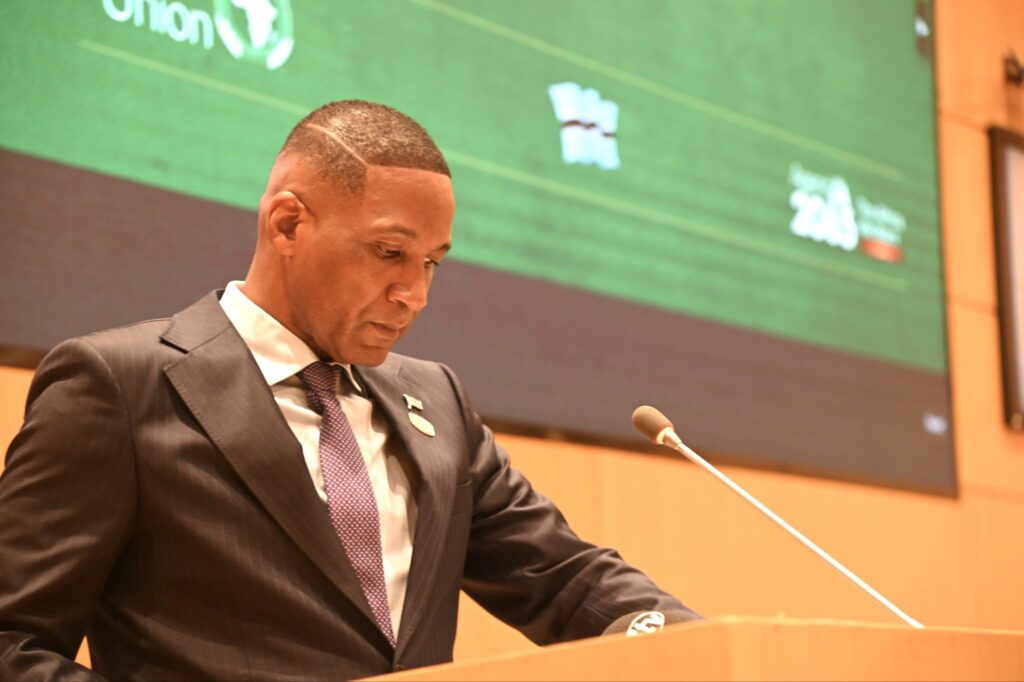
African Heads of State and Government have issued a united call for a new era of malaria financing, warning that stalled progress and declining international funding threaten to reverse decades of gains against the disease. The appeal came at the 39th African Union (AU) Summit in Ethiopia, alongside the release of the Africa Malaria Progress Report 2025.
The report, presented by President Advocate Duma Gideon Boko of the Republic of Botswana, Chair of the African Leaders Malaria Alliance (ALMA), reveals that AU Member States accounted for 270.8 million malaria cases and 594,119 deaths in 2024 – representing 96% and 97% of the global total respectively.
Since 2015, progress in malaria reduction has plateaued, with only five Member States meeting the 2025 Catalytic Framework targets, aimed at reducing malaria incidence and mortality by 75%.
President Boko highlighted the gravity of the situation, noting that a 30% reduction in funding could result in 640 million fewer insecticide-treated nets, 146 million additional cases, nearly 400,000 extra deaths – 75% among children under five – and a potential $37 billion GDP loss by 2030.
He warned: “The perfect storm of converging crises threatening malaria elimination has intensified… We cannot allow these challenges to reverse decades of progress that have prevented 1.64 billion cases and saved 12.4 million lives since 2000.”
In response, African leaders reaffirmed their commitment to domestic resource mobilisation, innovative financing, and sustainable health funding. Public-private partnerships have already mobilised over $200 million across 12 countries, demonstrating the power of multisectoral collaboration.
Leaders called for the renewal of the World Bank Malaria Booster Programme, which previously committed over $1 billion with transformative results between 2005 and 2010.
Tanzania’s President, H.E. Samia Suluhu Hassan, highlighted Africa’s role in scientific innovation, pointing to the Ifakara Health Institute’s work on gene drive technologies aimed at preventing mosquitoes from transmitting malaria.
The report also notes significant progress in deploying next-generation tools: 74% of insecticide-treated nets distributed in 2025 were dual active-ingredient nets, WHO-approved malaria vaccines reached 28.3 million children under five, and new spatial repellent products were prequalified. Seasonal malaria chemoprevention programmes expanded to 22 countries.
Emphasising health sovereignty, leaders stressed the need for local manufacturing, with Nigeria advancing production of antimalarial medicines and rapid diagnostic tests, and plans underway for Africa-manufactured next-generation nets. Regulatory harmonisation by the African Medicines Agency and Regional Economic Communities aims to accelerate access to new commodities.
Dr. Michael Adekunle Charles, CEO of the RBM Partnership to End Malaria, stressed the economic impact: “Full deployment of existing and new tools, combined with full funding, could save over 13.2 million lives over the next 15 years and boost African economies by over $140 billion. Every dollar invested in the Global Fund delivers $19 in returns. We have the tools. We need the resources.”
African leaders concluded with a firm call to action, urging member states to prioritise malaria within health sovereignty and economic development strategies, safeguard funding, and fully implement the Catalytic Framework through a Big Push Against Malaria.
They appealed to international partners to honour commitments and invest in next-generation tools and resilient health systems, emphasising that determined leadership, data-driven strategies, and sustained investment can steer Africa towards a malaria-free future.