Finance Minister Reviews President Hichilema’s Mining Indaba Message from Fiscal and Macroeconomic Perspective
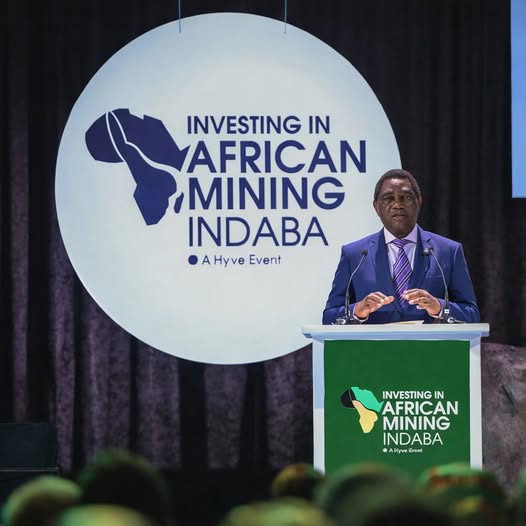
Minister of Finance and National Planning Dr Situmbeko Musokotwane, MP, has described President Hakainde Hichilema’s address at the 2026 Investing in African Mining Indaba as a strong affirmation of Zambia’s economic recovery and a clear roadmap for partnership-driven growth.
In a fiscal and macroeconomic review of the President’s message, Dr Musokotwane said the address, delivered shortly after Zambia successfully concluded its International Monetary Fund Extended Credit Facility (ECF) Programme in January 2026, highlighted the central role of macroeconomic stability and disciplined reforms in driving sustainable development.
He noted that the President’s message conveyed two mutually reinforcing priorities: the need to safeguard economic stability as a foundation for growth, and the importance of strategic partnerships in accelerating Zambia’s and Africa’s economic transformation through value addition and shared prosperity.
From a fiscal standpoint, the Minister said the address effectively highlighted the progress made since 2021, when Zambia faced severe debt distress, policy uncertainty and economic contraction. He observed that the reforms undertaken by the New Dawn Administration have restored confidence and credibility, positioning Zambia as a reliable partner for regional and international investors.
Dr Musokotwane pointed to the estimated US$12 billion in mining investments mobilised since 2021 as evidence of renewed investor confidence, driven by improved fiscal governance, predictable mining policies and debt restructuring under the G20 Common Framework. These developments, he said, have significantly reduced sovereign risk and unlocked private capital.
He further highlighted the steady recovery in copper production, with output rising by about 12 percent in 2024 and a further 8 percent in 2025. While power supply constraints prevented the attainment of the one-million-metric-tonne target in 2025, he said the upward trend is strengthening mineral royalty revenues and corporate income tax receipts, thereby supporting fiscal sustainability. Improved power stability in 2026 is expected to support production targets as Zambia advances towards its goal of producing three million metric tonnes of copper annually by 2031.
On value addition, the Minister said the President’s call for greater beneficiation of mineral resources carries significant fiscal implications. He explained that moving up the value chain would enhance export resilience, broaden the tax base and deepen linkages with manufacturing, logistics and services, amplifying the mining sector’s contribution to the wider economy.
Dr Musokotwane also placed the President’s message within the broader African development context, noting that Zambia’s restored macroeconomic stability—marked by declining inflation, foreign reserves exceeding four months of import cover and sustained real GDP growth of over five percent—has created favourable conditions for long-term investment in mining, energy and infrastructure.
He added that the emphasis on job creation and enterprise development aligns with Zambia’s Eighth National Development Plan, ensuring that mining-led growth delivers inclusive outcomes through local content, skills transfer and community development.
In addressing Africa’s role in the global energy transition, the Minister said the President’s remarks positioned Zambia and the continent as key players in the supply of critical minerals, while emphasising the importance of partnerships that extend beyond extraction to processing, technology transfer and sustainable mining practices.
Dr Musokotwane concluded that President Hichilema’s address at the Mining Indaba reflected both Zambia’s economic recovery and a forward-looking vision anchored in stability, partnerships and value addition.
“As Government, we remain committed to safeguarding macroeconomic stability while leveraging strategic partnerships to transform mineral wealth into jobs, enterprise development and resilient growth,” he said, adding that this balanced approach will help consolidate reform gains and advance Zambia’s long-term development objectives under Vision 2030.