Global Calls to Strengthen UN Accountability on Gender Equality and Health
Global health and human rights advocates have renewed calls for stronger accountability mechanisms to ensure governments deliver on commitments to gender equality and the right to health, warning that progress remains far off track despite decades of global pledges.
Speaking at the 1st SHE & Rights session of 2026, Dr Virginia Kamowa, Regional and Country Engagement Manager at the Global Center for Health Diplomacy and Inclusion (CeHDI), highlighted the importance of the Universal Periodic Review (UPR) as a critical tool for holding governments accountable for their human rights obligations.
The UPR is the only United Nations mechanism that reviews the human rights records of all 193 UN member states on a regular four-year cycle. According to Dr Kamowa, three review cycles have already been completed, with the fourth currently underway for the 2022–2027 period.
She explained that the UPR process involves national reports prepared by governments, alongside submissions from UN agencies, civil society organisations and national human rights institutions. During the review, other states make recommendations, which countries under review may accept or reject, with progress assessed in subsequent cycles.
Dr Kamowa said the UPR plays a vital role in national accountability because all recommendations are made public, allowing citizens, civil society and the media to track government commitments and follow up on implementation. “UPR links international human rights obligations to national policies, budgets and service delivery,” she noted, adding that public oversight is essential to ensure commitments translate into real change.
She highlighted data showing a steady increase in health-related recommendations under the UPR, with an overall acceptance rate of 76 percent, rising to 82 percent for health-related commitments. Notable progress has been recorded in recommendations related to maternal health, a key indicator of the right to health.
Maternal mortality, Dr Kamowa stressed, remains largely preventable and reflects systemic failures, including limited access to sexual and reproductive health services, workforce shortages, unsafe abortions and discrimination. Women who are poor, rural, young or marginalised continue to face the highest risks.
Recent UPR reviews were held in January 2026 for countries including Rwanda and Saint Lucia, while reviews for Namibia, Mozambique, Somalia, Seychelles and Eswatini are scheduled for May 2026.
However, challenges remain. Pauline Fernandez, Coordinator of the Philippine Safe Abortion Advocacy Network (PINSAN), said the Philippines recently rejected UPR recommendations to decriminalise abortion and pass an equality law, citing cultural and religious grounds. She noted that advocacy efforts continue through legislative engagement and public awareness initiatives.
Meanwhile, Paola Salwan Daher, Senior Director for Collective Action at Women Deliver, said the UPR remains one of the most accessible accountability tools for human rights defenders. She also emphasised the importance of amplifying girls’ voices in global policy spaces, highlighting the Girls’ Manifesto, developed by the Girls Deliver Community, as a critical advocacy framework.
Advocates also encouraged greater use of the Health & Rights Observatory, a CeHDI platform that tracks right-to-health data within UPR processes, to support evidence-based advocacy and monitoring.
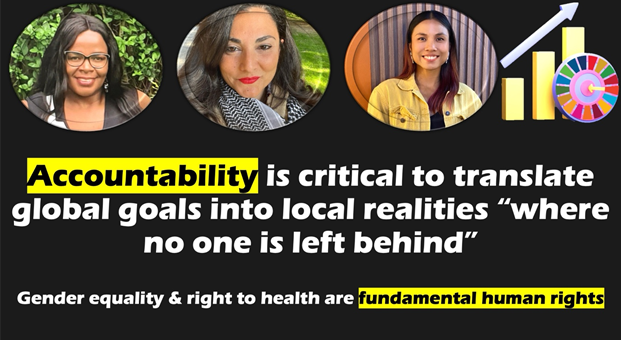
Participants concluded that gender equality and the right to health remain fundamental human rights that are far from being realised. They called for governments, civil society and international institutions to collectively strengthen accountability mechanisms like the UPR to ensure promises made at the global level result in meaningful change on the ground.