
Green Hydrogen Faces Cost and Policy Hurdles but Holds Long-Term Promise
Green hydrogen, long hailed as the future of clean energy, is facing increasing challenges as market growth slows and numerous projects are cancelled. High production costs, weak customer demand, and regulatory uncertainties are limiting adoption, raising questions over whether the technology can become a cornerstone of the energy transition. Despite these hurdles, experts maintain that green hydrogen has strong long-term potential.
The main obstacle to adoption remains cost. While grey hydrogen typically sells for US$1–2 per kilogram, green hydrogen ranges from US$5–10/kg, driven by expensive renewable electricity and high capital expenditure. Incremental improvements in electrolyzer efficiency have yet to achieve the dramatic cost reductions once expected, leaving green hydrogen uncompetitive in most applications.
Weak demand from potential buyers has created overcapacity in the market. Many companies prefer cheaper alternatives such as grey or blue hydrogen, which meet industrial needs without the green premium. This imbalance has affected the profitability of major electrolyzer manufacturers and slowed global adoption.
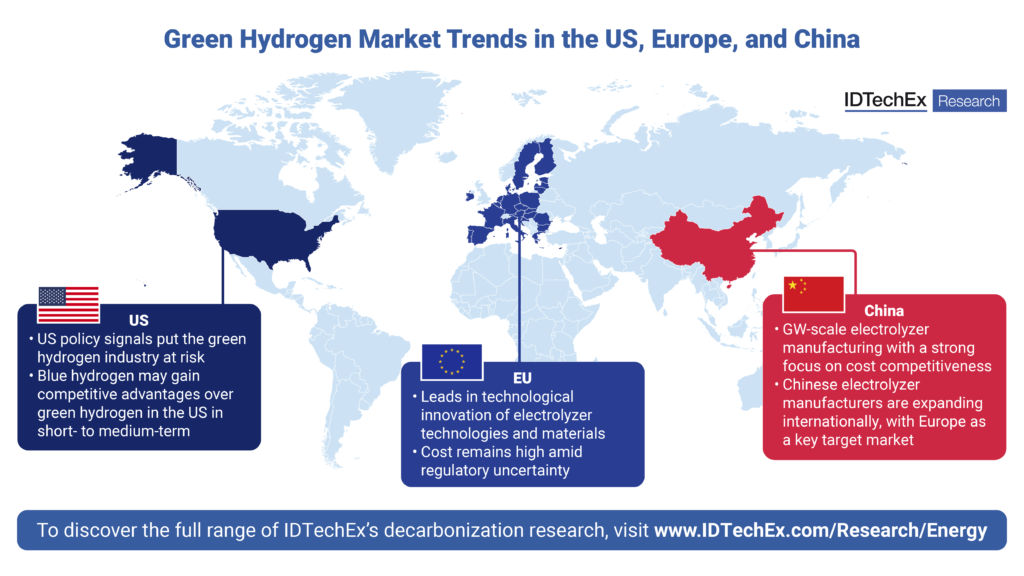
Regional trends show varying opportunities and risks. In the United States, the One Big Beautiful Bill Act (OBBBA) has reduced support for green hydrogen while favouring blue hydrogen projects that incorporate carbon capture.
This policy shift, combined with higher costs for imported equipment, has created an uncertain environment for developers. In Europe, technological innovation remains strong, but high labour and energy costs, along with complex regulations under RED III, continue to limit growth.
China has emerged as a global leader in electrolyzer production. Its complete domestic supply chain, large-scale manufacturing, and low labour costs allow Chinese companies to produce at highly competitive prices. Many are expanding abroad, particularly into Europe, increasing competition for regional manufacturers.
Despite short-term challenges, analysts are optimistic about the long-term prospects of green hydrogen. Advances in technology and new applications could reduce costs and drive adoption over time, positioning green hydrogen as a key contributor to global decarbonisation and the transition to net-zero emissions by 2050.
While scepticism remains about its immediate impact, green hydrogen is expected to play an increasingly strategic role in the global energy landscape, combining environmental benefits with the potential for industrial innovation and growth.