
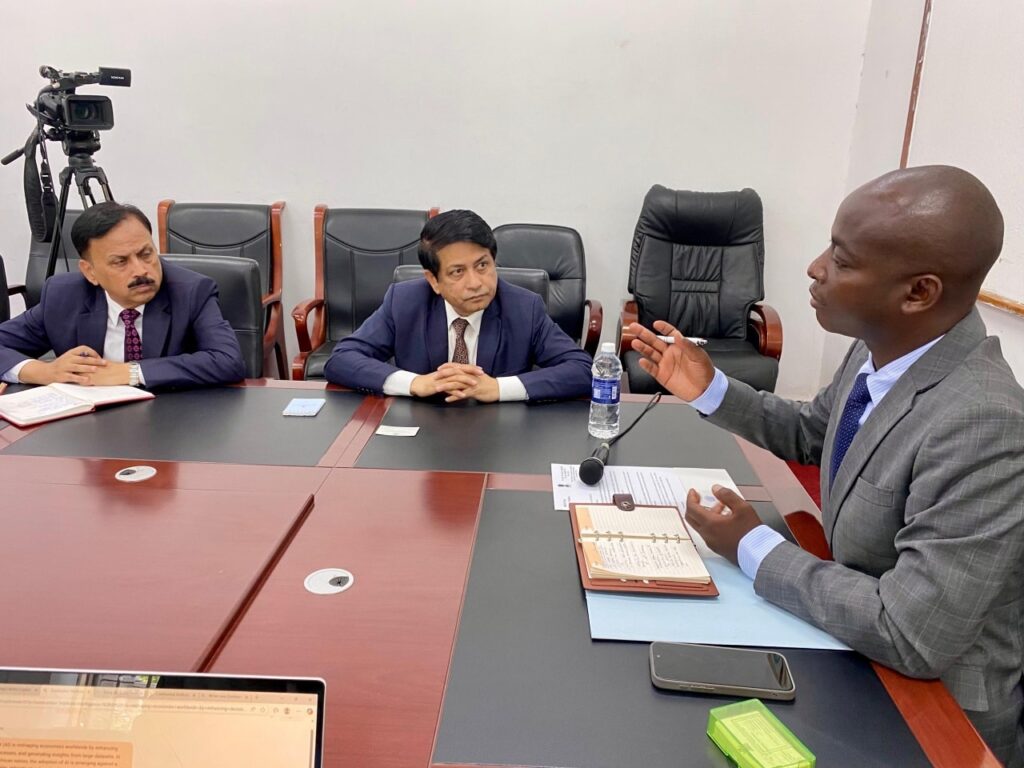
India and Zambia Discuss AI and Skills Cooperation
The High Commissioner of India to Zambia and Special Representative to the Common Market for Eastern and Southern Africa (COMESA), H.E. Mr Alok Ranjan Jha, has paid a courtesy call on the Ministry of Technology and Science to explore areas of cooperation, with a focus on artificial intelligence (AI), human resource development, and trilateral partnerships.
A key focus of the meeting was Zambia’s potential participation in the AI Impact Summit, scheduled to take place in India from 16 to 20 February 2026, with the main summit sessions on 19 and 20 February. The summit marks the Fourth Global AI Summit and will be the first edition hosted in a developing country, following previous meetings in the United Kingdom, South Korea, and France.
Mr Jha said the summit is grounded in the principles of inclusive and responsible AI development, which are particularly relevant for developing nations. More than 100 countries, alongside business leaders, innovators, civil society organisations, and academic institutions, are expected to attend.
He highlighted Zambia’s growing potential in AI, especially in the health sector, noting strong interest from Smart Zambia and other stakeholders. Participation in the summit, he said, would allow Zambia to learn from global best practices, showcase local innovations, and contribute to discussions on ethical and inclusive AI frameworks.
The meeting also reviewed cooperation under the Indian Technical and Economic Cooperation (ITEC) Programme, which provides short-term training in over 300 subject areas, including AI, agriculture, and digital technologies. Zambia currently has 170 training slots annually, with improved uptake recorded in the current year.
Mr Jha expressed readiness to advocate for an increase in Zambia’s allocation to between 300 and 350 slots, subject to sustained demand, and encouraged the Ministry to promote the programme, particularly among youth and public sector professionals.
He further noted that India offers 20 ICCR scholarships annually for undergraduate, postgraduate, and doctoral studies.
Representing the Ministry, Permanent Secretary Eng. Dr Brilliant Habeenzu reaffirmed Zambia’s commitment to the responsible and development-oriented use of AI, particularly in agriculture, mining, industry, and economic planning.
He stressed the need to align AI adoption with national development goals and ongoing reforms in skills development and technical education.
Both sides agreed to strengthen coordination and explore new bilateral and trilateral cooperation initiatives, including potential joint projects involving France and Germany, ahead of planned intergovernmental engagements in 2026 and 2027.