As Schools Reopen, Adolescent Mothers are Still Left at the Gate
As the school year begins, classrooms are filling up again. For many families, back-to-school season brings a sense of momentum — a return to learning, routine, and possibility. But for millions of adolescent girls, the promise of education is frustratingly out of reach.
Across the region, adolescent pregnancy remains widespread. Around one in four young women in Eastern and Southern Africa gives birth before the age of 19, and more than six million pregnant and parenting girls across sub-Saharan Africa are currently out of school or formal learning. Too many adolescent mothers never return after childbirth — not because they lack ambition or ability, but because systems are still not designed to accommodate adolescent motherhood or support alternative pathways for young mothers to continue learning.
Preventing early and unintended pregnancy remains a central development, health, and rights priority. No girl should become pregnant in adolescence because of gaps in access to information, services, or protection. But when prevention fails, exclusion from education must not be the consequence.
When pregnancy ends a girl’s education, the costs last generations
One of the most effective ways to improve outcomes for both young women and their children is to keep adolescent mothers learning. That means — alongside strong prevention measures -supporting them to complete secondary education or acquire equivalent vocational skills. When adolescent mothers remain engaged in education or training, they are more likely to access decent work, experience better health and wellbeing, and build economic security. Their children, in turn, are more likely to survive infancy, grow and develop well, and succeed in school.
Adolescent motherhood rarely exists in isolation. Evidence shows that adolescent mothers face overlapping risks, including violence, poor mental health, repeat pregnancy, and heightened vulnerability to HIV. Disengagement from learning is rarely a single event. It is the cumulative outcome of systems that fail to respond when girls are most in need. This issue extends far beyond individual girls: it shapes whether countries invest in cycles of opportunity or allow cycles of disadvantage to persist.
Policies exist — but implementation is falling short
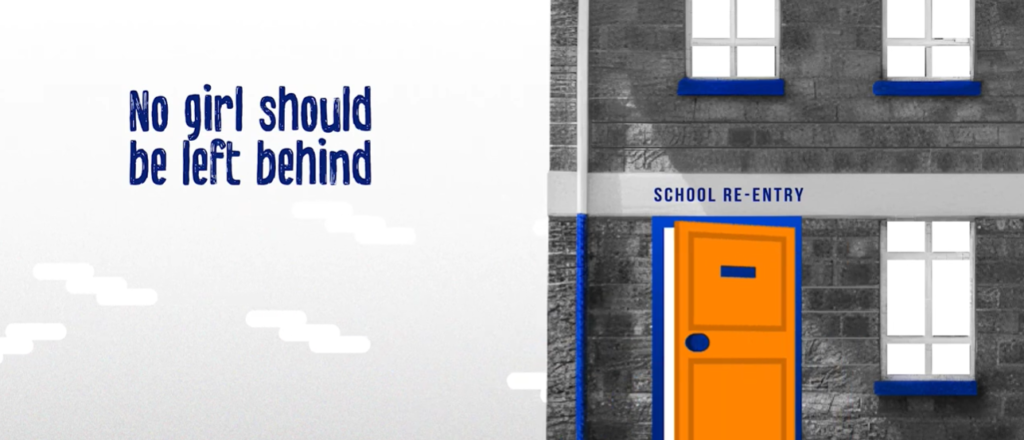
There has been progress. Governments across the region increasingly recognise that pregnancy should not mark the end of a girl’s education. Our new analysis found approximately half of countries in Eastern and Southern Africa now have a school re-entry policy for pregnant and parenting adolescents. This momentum reflects broader continental commitments, including from the African Union. Yet recognition on paper has not translated into consistent practice.
This new review highlights a persistent implementation gap. Even where re-entry policies exist, many are not backed by dedicated budgets, clear operational guidance, or systematic training for school leaders and teachers. Flexible options — such as accelerated learning, distance education, evening classes, or vocational pathways — remain limited or poorly communicated. In many contexts, re-entry is delayed by mandatory waiting periods, medical clearance requirements, or proof of childcare — conditions that, while often well-intentioned, end up pushing girls out of learning altogether.
For adolescent mothers, this gap is not abstract. It shows up as Principals who are unaware of the policy, educators who quietly discourage return, families who fear stigma, and learning environments that lack childcare, flexibility, or support services. Deeply rooted social and religious norms continue to block re-engagement with education long after a girl has given birth.
The pattern is clear: policies to support getting adolescent mothers back to school exist, but the guidance, resourcing, and capacity required for systems to respond consistently are often missing. In many countries, education data do not even capture pregnant or parenting adolescents — making exclusion invisible and accountability difficult.
Support that helps policies work in real life
Across several countries, peer-based approaches — including Young Mentor Mother models — help adolescent mothers re-engage with learning and stay on track. These programmes provide psychosocial support, link girls to health and social services, and help them navigate re-entry during a critical transition period. They help translate rights on paper into sustained participation, retention, and completion.
Some countries are also beginning to engage young fathers through counselling and support, signalling an emerging shift toward shared responsibility rather than silence or blame. While still limited, these efforts reflect growing recognition that adolescent pregnancy is not a girls-only issue.
From commitment to action
One thing is clear: adolescent mothers are not failing education systems. Systems are failing to respond to the realities of adolescent motherhood. Progress has been made in law and policy. What is still missing is sustained investment in implementation, stigma reduction, and coordination between different sectors such as health and education. These are the conditions required to deliver accountability, results, and to turn African Union commitments into practice.
As the school year begins, the question is no longer whether adolescent mothers deserve another chance. The evidence is clear, and the policies already exist.
Our responsibility is to fulfil girls’ fundamental right to education and learning — before, during, and after pregnancy. Back-to-school must mean a real return to learning for all girls, including those who became mothers too soon. Their futures are far from over — but only if systems choose to act.