Despite Decades of Promises, Gender Equality Remains Elusive
As 2025 draws to a close, global leaders and citizens alike are forced to confront a stark reality: despite decades of international commitments, gender equality remains frustratingly out of reach. Since the adoption of the United Nations Charter in 1945, which explicitly emphasises “We the peoples…” rather than “We the men…”, governments have repeatedly pledged to advance the rights of women.
Subsequent milestones included the Universal Declaration of Human Rights (1948), the CEDAW treaty (1979), and resolutions against gender-based violence at the UN General Assembly (1993). The Beijing Declaration and Platform for Action (1995) and the UN Sustainable Development Goals (2015) further underscored the global promise to ensure equality “where no one is left behind” by 2030.
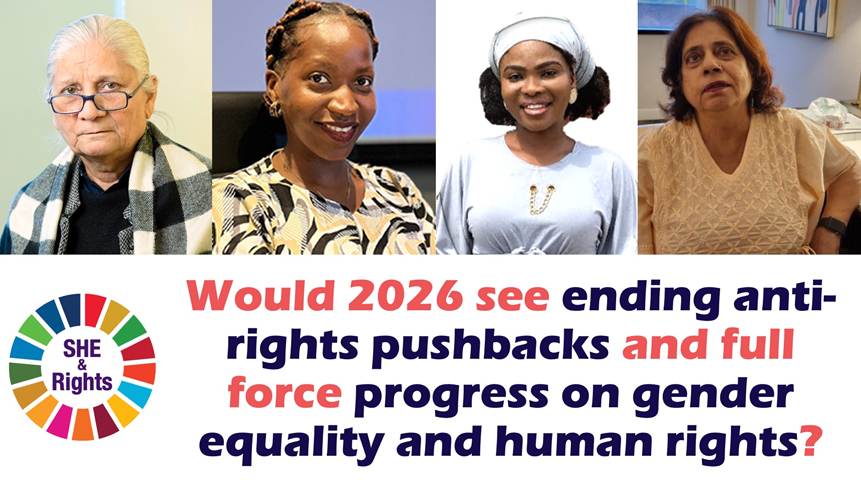
Yet, progress remains painfully slow. Annual declines in intimate partner and sexual violence have averaged just 0.2% since 2000, according to Shobha Shukla, Coordinator and Host of SHE & Rights (Sexual Health with Equity & Rights).
“Despite historic advances, anti-rights and anti-gender pushbacks threaten to undo the fragile gains achieved by decades of feminist struggle,” she said.
Dr Pam Rajput, Emeritus Professor at Panjab University and keynote speaker at the SHE & Rights session this month, highlighted the ongoing prevalence of violence against women and girls.
“Over 840 million women have faced violence globally. In conflict zones, the figures are even higher. Last year alone, 316 million women experienced physical or sexual violence from intimate partners, and 263 million from non-intimate partners. More than 51,000 cases of femicide were reported,” she said.
Even women in positions of power are not spared. Studies reveal that 73% of women journalists face online harassment, while 60% of women MPs in the Asia-Pacific region report online gender-based violence. Other forms of abuse including psychological, sexual, economic, and physical violence—remain prevalent, particularly among younger women, minority groups, and unmarried women.
Experts point to structural inequalities, patriarchal norms, under-investment in gender equality, and gender-insensitive law enforcement as key barriers to progress. “Promises made at the global level must translate into local realities,” Dr Rajput emphasised.
Gender-based violence also intersects with health risks, including HIV and reproductive health challenges. Esther Asuquo, gender and peace advocate from Nigeria, explained that violence undermines women’s ability to negotiate safe sex, compounding vulnerabilities to HIV and other infections.
Period poverty, lack of access to menstrual products and hygiene facilities continues to affect millions globally, restricting education and economic opportunities. Angel Babirye, Emerging Women Deliver leader from Uganda, stressed the urgent need for safe spaces and accessible menstrual hygiene management to ensure girls can live dignified lives.
Looking ahead, experts hope 2026 will mark renewed efforts to counter anti-rights pushbacks and deliver tangible progress on gender equality and human rights. “The only socially just and ecologically sustainable world order is a feminist one, where health, gender, social, economic, climate, and redistributive justice take centre-stage,” Shukla concluded.