
AfDB Dialogue Renews Push for Free Movement in Africa
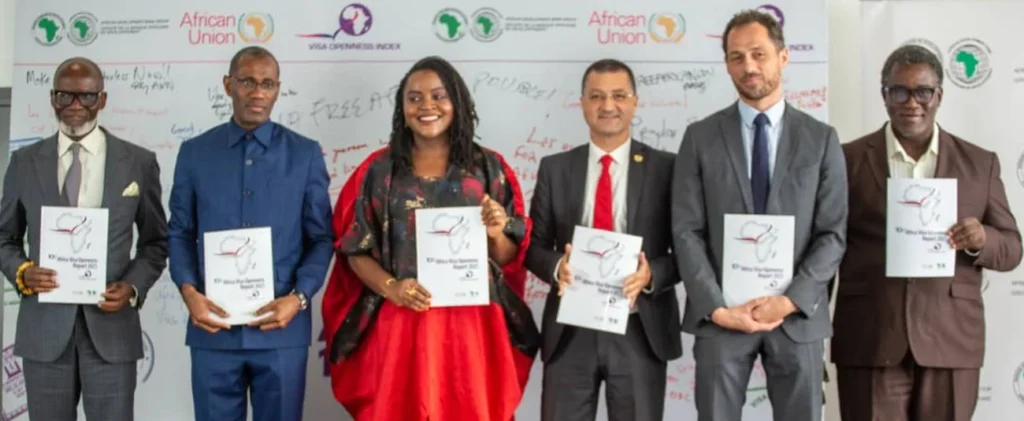
Africa’s efforts to ease the movement of people gained fresh momentum on 12 December 2025, as private sector leaders, civil society groups and policymakers gathered in Abidjan for a policy dialogue hosted by the African Development Bank (AfDB) and the African Union Commission.
The dialogue marked ten years of the Africa Visa Openness Index (AVOI), a flagship report that measures how open African countries are to travellers from across the continent. Participants examined how freer movement supports trade, job creation and regional integration, while also confronting the uneven pace of reform.
Opening the meeting, AfDB Vice-President for Regional Development, Integration and Business Delivery, Nnenna Nwabufo, emphasised that visa openness is a practical development choice. She urged governments to translate commitments into action, noting that open visa regimes help boost trade, tourism and investment.
“Over a decade of evidence shows that visa openness can deliberately strengthen trade, tourism, investment and regional confidence,” Nwabufo said.
Speakers widely agreed that political will remains the decisive factor. While security and administrative concerns are often cited, many participants argued these are frequently used to delay reform. Several interventions highlighted the gap between Africa’s integration ambitions and the daily realities faced by travellers and businesses, stressing that trust and confidence are as important as procedures.
Ladislas Nze Bekale, Special Representative of the Chairperson of the African Union Commission to Côte d’Ivoire, said progress over the past decade proves change is possible, but called for faster action towards a people-centred single African market.
In a virtual address, Professor Melaku Desta of the United Nations Economic Commission for Africa (UNECA) said the vision of a more open Africa is achievable, but political momentum remains slow. He praised the Africazone concept outlined in the 2025 AVOI report, describing it as both necessary and feasible, and called for closer collaboration to turn analysis into action.
Eight years after the adoption of the African Union Protocol on Free Movement of Persons, only four member states have ratified it, underlining the scale of the challenge.
Acknowledging progress, Dr Joy Kategekwa, Director of the AfDB’s Regional Integration Coordination Office, said reforms remain below Africa’s ambitions. She called for broader coalitions, sustained leadership and accelerated implementation, as participants symbolically signed a wall of commitment to a visa-free Africa.
The 2025 Africa Visa Openness Index was officially launched on 18 December 2025 at the Ninth Pan-African Forum on Migration in Cape Town. The report shows the continental average score rising to 0.448, with visa-free travel increasing from 20% in 2016 to 28% in 2025. E-visa availability has expanded significantly, although visa-on-arrival access has declined and pre-travel visa requirements remain high.
Countries including Kenya, Zambia, Ghana and Tanzania recorded notable improvements, while Rwanda and The Gambia achieved full openness over the past decade. The findings point to steady, if uneven, progress towards Africa’s goal of freer movement as a driver of trade, skills and opportunity across the continent.