GIZ Delivers Revised Agriculture Curriculum and Gender Toolkit
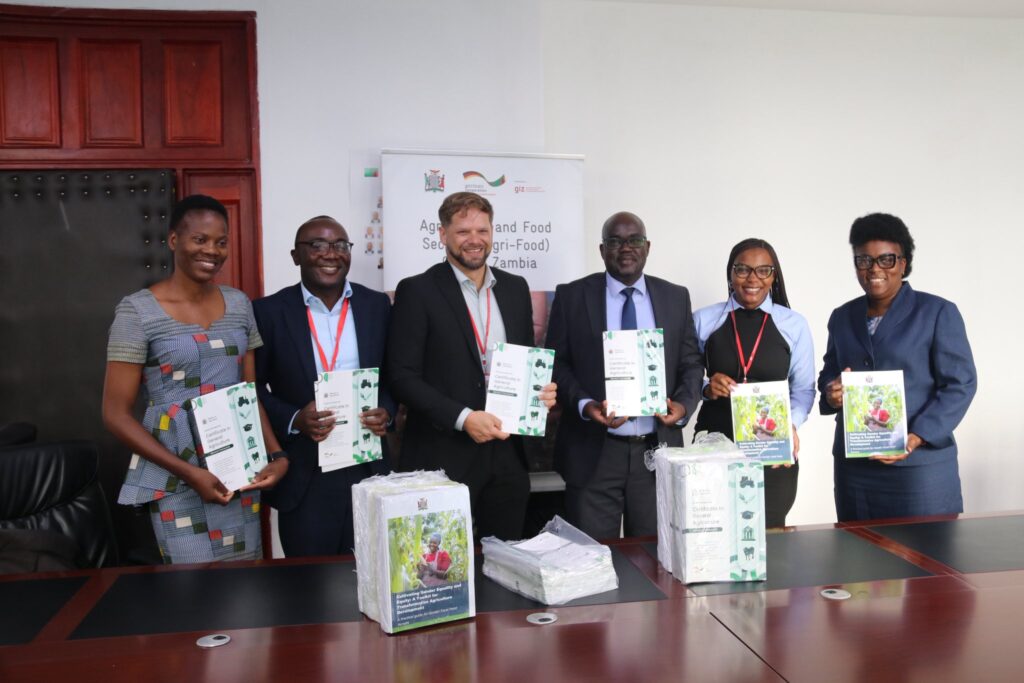
The German Agency for International Cooperation (GIZ), through the Climate-Resilient Agri-Food Systems (CREATE) project, has handed over the Revised Certificate in General Agriculture Curriculum for Agricultural Training Institutions and a Gender Mainstreaming Toolkit to the Ministry of Agriculture, marking a significant step in strengthening agricultural education and promoting gender-responsive programming in the sector.
The documents were officially received by the Director of Human Resource and Administration at the Ministry of Agriculture, Mr Lemmy Kamfwamfwa, on behalf of the Ministry.
Speaking at the handover ceremony, Mr Kamfwamfwa commended GIZ and the CREATE project for the continued partnership, noting that the revised curriculum and toolkit will contribute to building a skilled, inclusive and climate-resilient agricultural workforce.
He said the revised curriculum will ensure that future agricultural extension officers are equipped with practical, climate-smart and market-relevant skills, while the Gender Mainstreaming Toolkit will enhance the Ministry’s capacity to integrate gender considerations into agricultural planning and service delivery.
Mr Kamfwamfwa reaffirmed the Ministry’s commitment to modernising agricultural training and institutionalising gender equality across its programmes and interventions.
Leading the GIZ delegation, CREATE Component Manager Mr Hendrik Hoffmann said the handover demonstrated the shared commitment between the Government of the Republic of Zambia and its cooperating partners to developing resilient and inclusive agri-food systems.
He explained that the documents are practical tools designed to address climate change challenges and the evolving needs of the agricultural sector.
The Revised Certificate in General Agriculture Curriculum integrates climate-smart and sustainable agricultural practices, responds to emerging environmental and climate challenges, and aligns training with current industry and labour market demands.
Meanwhile, the Gender Mainstreaming Toolkit is intended to guide the Ministry in ensuring that women, men and young people benefit equitably from agricultural programmes.