More South Africans Returning Home After Working Abroad, Study Finds
A growing number of South Africans are returning home after gaining international work experience, with family ties and lifestyle priorities emerging as key drivers, according to new research by The TEFL Academy.
The findings, published in the Reverse Emigration Among South Africans report, are based on a survey of 173 South Africans who have lived and worked abroad. More than half (53.05 per cent) of respondents said they have already returned home, signalling a shift in migration patterns.
The study shows that emotional and social factors outweigh financial considerations for many returnees. A significant 77.46 per cent of respondents said they missed time with family and friends the most while living abroad, while 66.9 per cent cited South Africa’s social culture and 55.63 per cent its outdoor lifestyle as major pull factors.
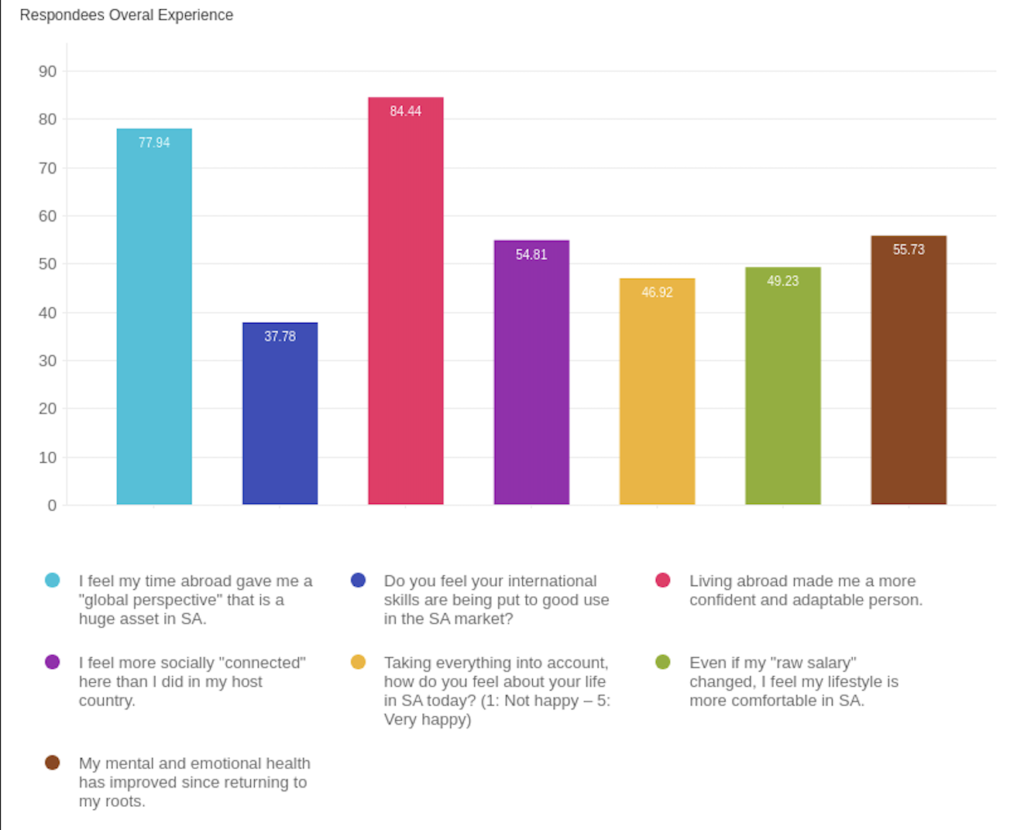
Researchers found that international experience continues to play a crucial role in personal and professional development. Respondents rated the value of gaining a global perspective at an average of 4.19 out of 5, while personal growth indicators such as confidence and adaptability scored even higher.
Despite these benefits, overall life satisfaction after returning to South Africa was rated at a moderate 3.41 out of 5, reflecting a balance between improved social well-being and ongoing economic considerations.
Managing Director of The TEFL Academy, Rhyan O’Sullivan, said the trend reflects a broader shift in how South Africans approach global opportunities.
“For many South Africans, working abroad is a way to build skills, confidence and savings. Increasingly, we are seeing people return home after a few years, often continuing to work with international clients remotely,” he said.
The report highlights the rise of “circular migration”, where professionals move abroad temporarily before returning home with enhanced skills, networks and experience. This trend is being supported by the growth of remote work, allowing individuals to earn in stronger foreign currencies while living in South Africa.
According to Statistics South Africa, nearly 28,000 South Africans returned home in 2022, marking one of the first notable waves of reverse migration in recent years. At the same time, global estimates suggest that more than one million South Africans continue to live abroad.
However, challenges remain. Respondents indicated that their international skills are not always fully utilised locally, with this factor receiving an average rating of 3.19 out of 5. Analysts say this points to gaps between global experience and domestic labour market opportunities.
The study also found that many South Africans begin their international careers through Teaching English as a Foreign Language (TEFL), which offers accessible entry into overseas employment across regions such as Europe, Asia and Latin America.
As migration patterns evolve, the report suggests that relocation is increasingly becoming flexible rather than permanent. For many South Africans, time abroad is now viewed as a stepping stone rather than a final destination, with home remaining central to long-term life plans.