
Tanzania Steps Up Drive for Universal Health Coverage at Key Health Sector Review
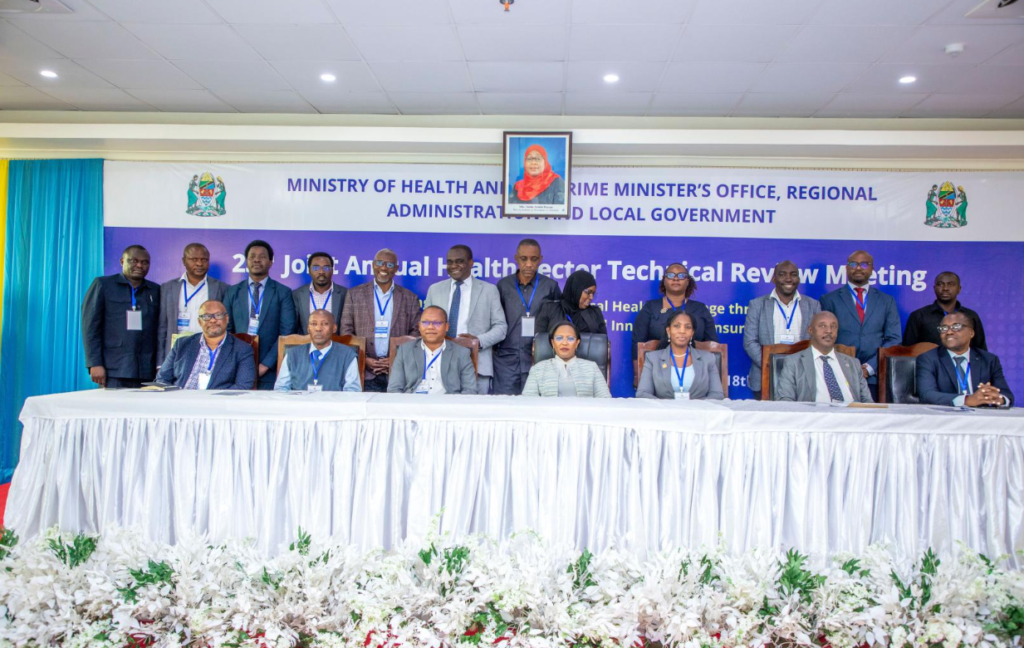
Tanzania has reaffirmed its commitment to achieving Universal Health Coverage (UHC) as stakeholders convened for the 25th Joint Annual Health Sector Technical Review Meeting (JAHS-TRM) held from 17–18 March in Dodoma.
The high-level meeting brought together government officials, development partners, non-state actors, and private sector representatives to assess health sector performance for 2025 and set priorities for the 2026/27 financial year under the theme of accelerating UHC through leadership, accountability, and digital innovation.
Chairing the meeting, Tumaini Nagu, Deputy Permanent Secretary for Health in the Prime Minister’s Office – Regional Administration and Local Government, reaffirmed the Government’s commitment to expanding access to essential health services through the national rollout of Universal Health Insurance.
She highlighted progress in infrastructure development, strengthened local governance, and rapid digital transformation, including the near-complete installation of GoTHOMIS across public health facilities.
However, she noted ongoing challenges such as shortages in human resources for health, limited medical commodities, and the need for improved preparedness against emerging diseases. She called for stronger coordination to ensure effective implementation of policy priorities.
Acting Permanent Secretary at the Ministry of Health, Alex Magesa, emphasised the importance of evidence-based decision-making in improving accountability and service delivery. He cited progress in specialised healthcare services, increased utilisation of primary health care, and a reduction in maternal mortality rates.
Nonetheless, he acknowledged persistent workforce shortages, the growing burden of non-communicable diseases, and the need to fully integrate digital health systems.
Development partners, represented by Melissa McNeil-Barret, reiterated their support for Tanzania’s health priorities, including the rollout of Universal Health Insurance and the development of the Health Sector Transformation Plan (2026–2031). They stressed the importance of coordinated, multi-sectoral approaches and improved interoperability of digital systems.
Non-state actors, led by Anthony Mwendamaka, acknowledged improvements in health information systems and access to medicines, but raised concerns about staffing shortages at primary healthcare level, fragmented digital platforms, and inconsistent financing for community health workers.
Private sector and faith-based organisations, including APHTA, BAKWATA and CSSC, represented by Samwel Ogillo, welcomed increased recognition of their role in service delivery. They highlighted rising demand linked to expanded insurance coverage and called for increased investment in infrastructure and specialised training, particularly for critical health personnel.
The World Health Organization Representative in Tanzania, Alex Gasasira, commended the country’s improving health indicators, including gains in immunisation, maternal and child health, disease surveillance, and digital transformation. He emphasised the need to strengthen primary health care systems and enhance accountability through improved data use.
Stakeholders reviewed key sector reports, including the Annual Health Sector Performance Profile and National Health Accounts, which identified challenges such as rising non-communicable diseases, workforce gaps, declining external financing, and the need for increased domestic health funding.
Participants developed policy recommendations for the 2026/27 financial year aligned with core health system priorities, including service delivery, workforce development, health financing, infrastructure, and governance. These will inform the forthcoming Health Sector Transformation Plan (2026–2031) and broader national development goals.
In closing, stakeholders emphasised shared responsibility in strengthening the health sector. The Government reaffirmed its commitment to enhancing governance, improving health information systems, and increasing investment across all levels of care.
The final policy commitments are expected to be adopted later in March 2026 during the Joint Annual Health Sector Policy Meeting, co-chaired by the Ministers of Health and Regional Administration and Local Government.