
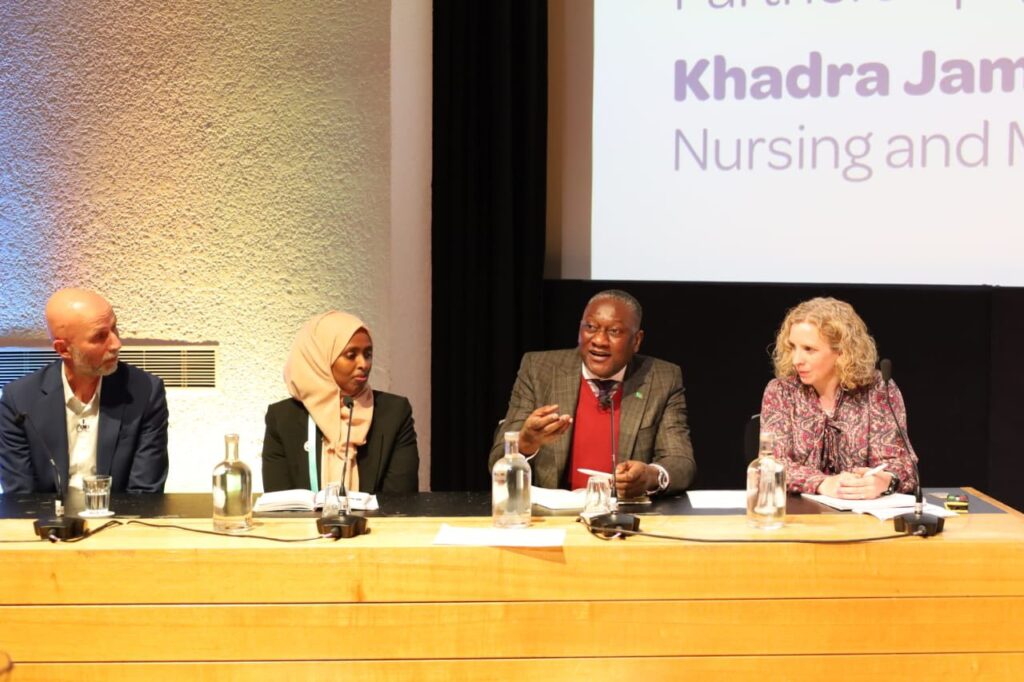
Global Partnerships Crucial to Zambia’s Sustainable Health Services, Says Dr Lishimpi
Ministry of Health Permanent Secretary, Dr Kennedy Lishimpi, has underscored the critical role of global partnerships in delivering sustainable and locally responsive health services in Zambia.
Speaking during a panel discussion titled “The Health Partnership Approach: What Next?” at the UK Global Health Summit 2026 held at the Royal College of Physicians, Dr Lishimpi said strategic collaborations are essential in mobilising catalytic funding and achieving measurable health outcomes within three to five years.
He noted a growing shift towards partnerships that prioritise local needs and efficiency, driven by constrained global funding. “There is a need to do more with less, through integrated service delivery models and human-centred approaches,” he said.
Dr Lishimpi explained that modern partnerships are increasingly guided by the “one plan, one budget, and one monitoring and evaluation framework” model, influenced by global challenges such as pandemics, climate change, and digital transformation.
However, he cautioned that issues of trust, fragmentation, and siloed implementation continue to hinder effective collaboration.
He further highlighted the importance of health diplomacy, particularly for low-income countries navigating complex global health systems, stressing that local priorities must remain central to all partnerships.
During a separate session, Dr Lishimpi outlined Zambia’s strategy to eliminate mother-to-child transmission (MTCT) of HIV, Hepatitis B, and Syphilis by 2030.
He revealed that Zambia has introduced triple test kits for antenatal care and has reduced HIV transmission rates to 2 per cent, although follow-up data indicates a rise to 6 per cent, largely due to limited testing among male partners.
Dr Lishimpi disclosed that in 2024, approximately 815,000 pregnant women attended at least one antenatal visit, with 768,000 tested for HIV and other infections. Of these, 53,000 tested positive and were initiated on antiretroviral therapy. However, only 41 per cent of HIV-negative pregnant women accessed pre-exposure prophylaxis (PrEP), contributing to ongoing transmission risks.
To address this, Zambia is scaling up access to PrEP through multiple options, including daily oral medication, two-monthly cabotegravir injections, and six-monthly lenacapavir injections, giving women greater choice in prevention.
Dr Lishimpi also revealed that government funding for medicines has increased from ZMW 4.9 billion in 2025 to ZMW 6.4 billion in 2026, reinforcing efforts to strengthen healthcare delivery.
In addition, Zambia has established a local manufacturing facility for rapid diagnostic test kits covering diseases such as malaria, HIV, syphilis, Hepatitis B, cholera, and pregnancy. The facility has already produced its first 5,000 kits, which are currently undergoing validation.
He expressed confidence that this investment will enhance national health security and ensure universal testing for antenatal mothers.
Dr Lishimpi’s remarks highlighted Zambia’s commitment to strengthening health systems through strategic partnerships, innovation, and increased domestic investment, even amid global funding constraints.