
Women Farmers Drive Agricultural Transformation in Mpumalanga
A quiet agricultural transformation is unfolding in Mpumalanga, where rural women farmers are increasingly breaking barriers to enter formal markets and build sustainable livelihoods.
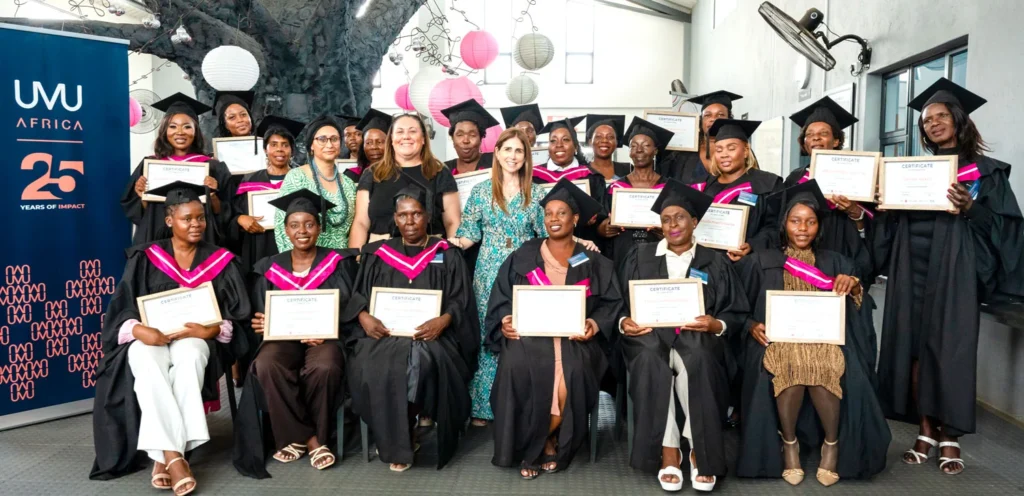
A group of 25 women farmers from the Bushbuckridge area have successfully transitioned from subsistence farming to supplying major retailers, school feeding schemes and local lodges. The transformation follows a targeted agricultural development programme funded by the African Development Bank, the Climate Investment Funds and Absa Bank, and implemented by UVU Africa under the South Africa Just Energy Transition Jobs First Project.
Among the programme’s graduates is Skhulile Phelitia Malibe, a farmer from Marite village whose thriving cabbage fields now symbolise the possibilities emerging for rural women in agriculture.
“Before I joined the programme, I could not tell at the end of the day whether I had made money or not,” Malibe said. “Now I record every transaction and track my harvests.”
With improved financial management and farming practices, Malibe has expanded her workforce beyond the original three employees and is steadily moving towards becoming a fully commercial farmer.
Her neighbour and fellow graduate, Kolile Malibe, says the programme has reshaped her understanding of farming as a business.
“It opened my mind. I am now becoming a commercial farmer and increasing my number of employees day by day,” she said.
The initiative was launched as a pilot project in Bushbuckridge to address long-standing structural barriers faced by rural women farmers, including limited access to training, market opportunities, technology and financial literacy.
Participants received comprehensive agricultural and business management training, one-on-one mentorship and tablets equipped with digital tools to manage farm operations, monitor expenses and access real-time weather information.
For farmer Gracious Masuku from Belfast Trust village, the financial literacy component proved particularly transformative.
“My financials were not in order, but now I am able to record them myself and maintain good cash flow,” Masuku said. “I am building a system that will continue working long after me.”
According to Lara Rosmarin, Cluster Catalyst at UVU Africa, the programme has delivered strong results.
“More than 90 per cent of graduates are now supplying retailers, agri-hubs, school feeding schemes and local lodges, creating 66 new jobs through sustainable farming enterprises,” Rosmarin said.
The programme has also opened new opportunities within the tourism economy linked to the Greater Kruger National Park, which attracts nearly two million visitors annually and supports hundreds of luxury safari lodges.
Nawsheen Elaheebocus, Task Manager for the project at the African Development Bank, noted that the region’s hospitality sector offers significant opportunities for local farmers.
“The Greater Kruger safari tourism economy represents a hospitality market estimated at more than $1 billion per year,” she said. “Through this project, women farmers in Mpumalanga are now able to supply high-value fresh produce directly to these lodges.”
One of the programme’s most compelling stories is that of Smangele Makutu, a young entrepreneur from Bushbuckridge who once lived on the streets. Today she farms on land provided by her former high school under a 15-year agreement, supplying produce to local supermarkets while also contributing to agricultural education for current pupils.
Overall, the programme has reported measurable outcomes. Every participant has improved farm layouts and yields, 92 per cent are diversifying crops and 77 per cent have applied for funding or investment to expand their operations. Five regional farmer clusters have also been formed to facilitate collective market access and peer support.
Following the pilot’s success, partners plan to scale up the initiative across additional areas of Mpumalanga. Future phases will focus on strengthening market linkages, improving access to finance and expanding digital literacy and modern farming technologies.
Dheepak Maharajh, Chief Executive Officer of UVU Bio, said the programme demonstrates the potential of targeted support to transform rural economies.
“For generations many farmers have operated in a ‘survive, not thrive’ environment,” Maharajh said. “This initiative shows that with the right support systems, the path out of intergenerational poverty becomes tangible.”
The initiative also contributes to South Africa’s broader Just Energy Transition, which aims to ensure communities benefit economically from the country’s shift away from coal.
Babatunde Omilola, Human Development Division Manager at the African Development Bank, emphasised the broader significance of the project.
“This initiative is essential for a fair energy transition in South Africa, promoting job creation, gender equality and social inclusion, while ensuring that rural communities benefit from the green economy,” he said.
Across Mpumalanga’s farmlands, these women farmers are not simply cultivating crops. They are cultivating opportunity, building resilient businesses and reshaping the future of rural agriculture.