SADC Ministers Call for Faster Implementation of Regional Policies to Drive Integration and Development
Ministers from the Southern African Development Community (SADC) have called for accelerated implementation of regional policies and programmes to advance integration and development across Southern Africa.
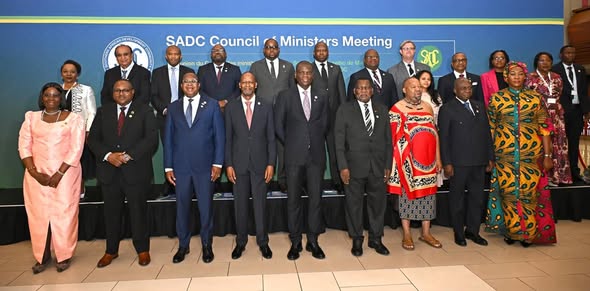
The call came at the conclusion of the two-day SADC Council of Ministers Meeting held in Pretoria under the theme “Advancing Industrialisation, Agricultural Transformation, and Energy Transition for a Resilient SADC.”
The meeting was opened and chaired by Ronald Lamola in his capacity as Chairperson of the SADC Council of Ministers.
Minister Lamola urged member states to strengthen cooperation to deliver tangible benefits for citizens, including improved livelihoods, job creation, food security, energy access and economic resilience.
“If integration remains rhetorical, confidence in our common agenda will diminish. But if we act decisively and implement agreed commitments effectively, our region has the potential to emerge as a dynamic force for industrial growth, innovation and sustainable development,” he said.
He also called on member states to mobilise resources, ratify legal instruments that support regional cooperation and leverage opportunities arising from strategic partnerships.
The Council acknowledged progress made in advancing regional integration, including the expansion of digital connectivity, with internet penetration across the region now reaching 54 per cent.
Other milestones include the rollout of One-Stop Border Posts, which have improved cross-border trade efficiency, and the addition of more than 14,000 megawatts of electricity generation capacity, increasing the share of renewable energy in the regional mix from about 25 per cent to 38 per cent.
Elias Magosi emphasised that peace and security remain fundamental to regional development.
“Without stability, industrialisation falters, investment declines, and Vision 2050 slips beyond reach,” he said, noting that SADC continues to engage in efforts to address governance and security challenges in the Democratic Republic of the Congo and Madagascar.
On trade integration, Mr Magosi said intra-SADC trade in manufactured goods had risen from 19 per cent to 22 per cent, reflecting modest progress in regional market integration and value chain development. He called on member states to eliminate trade barriers in order to accelerate economic growth.
The Executive Secretary also highlighted efforts to reposition the mining sector as a catalyst for industrialisation by shifting focus from the export of raw materials to value addition.
“Our challenge has never been scarcity, but value addition,” Mr Magosi said, citing the revision of the SADC Protocol on Mining and the adoption of the Critical Minerals Framework at the G20 Summit as opportunities to reshape global supply chains while strengthening regional prosperity.
Mr Magosi emphasised the importance of the Regional Development Fund (RDF) as a key mechanism for financing regional development.
“The RDF is our vehicle for transformation. Without it, we stand still. And with it, we can boldly move forward together,” he said.
Council urged member states that have not yet ratified the 2016 Agreement on the Operationalisation of the SADC Regional Development Fund to fast-track their national processes to ensure the fund becomes fully operational.
The Council approved the 2026–2027 Annual Corporate Plan, which outlines measures to accelerate implementation of priorities under the Regional Indicative Strategic Development Plan (RISDP) 2020–2030. These include peace and security, industrial development, infrastructure development, market integration, and social and human capital development, alongside cross-cutting issues such as gender, youth, climate change and disaster risk management.
In response to global geopolitical tensions and economic volatility, the Council resolved to convene an urgent meeting of Ministers of Foreign Affairs to assess their impact on the region. Ministers of Finance and Investment, together with central bank governors, have also been tasked with assessing the second-round effects of global developments on regional economies.
The Council further called for a coordinated regional response to Foot and Mouth Disease, including strengthened cross-border surveillance, harmonised vaccination programmes and improved information sharing to protect livestock-based livelihoods and food security.
Member states were also urged to accelerate the development of irrigation infrastructure and water-harvesting systems, invest in climate-resilient seed research and strengthen agricultural extension services.
Council approved three years of funding for 12 projects under the SADC HIV and AIDS Special Fund Round IV, focusing on HIV prevention research, mental health integration, sexual and reproductive health, gender-based violence prevention and targeted support for vulnerable populations, including youth.
In addressing disaster management, the Council commended the Republics of Angola, Botswana, Mauritius, South Africa, Zambia and Zimbabwe for supporting member states affected by disasters. It also urged greater investment in post-disaster recovery and climate adaptation strategies to reduce future losses.
Council encouraged member states to support the establishment of the SADC Pooled Procurement Services (SPPS) group contracting model, which will enable countries to jointly negotiate procurement processes to improve efficiency and reduce costs.
Ministers also approved three Memoranda of Understanding aimed at strengthening international cooperation. These include agreements between SADC and Japan, the World Food Programme, and the African Wildlife Economy Institute.
The agreements focus on areas such as infrastructure development, food security, disaster risk management, wildlife economy research, biodiversity conservation and sustainable value chains.
The SADC Council of Ministers, composed of ministers responsible for foreign affairs, international relations, economic planning, finance or trade from the region’s 16 member states, oversees the implementation of policies and decisions of the organisation.
The next ordinary Council meeting is scheduled to take place in August 2026, ahead of the 46th SADC Summit of Heads of State and Government.