AfDB Urges Private Sector Partnership in Humanitarian Crises at Geneva Forum
The fifth Geneva International Cooperation Forum, organised by the Swiss Federal Department of Foreign Affairs’ Agency for Development and Cooperation, brought together high-level stakeholders to discuss partnerships in humanitarian contexts.
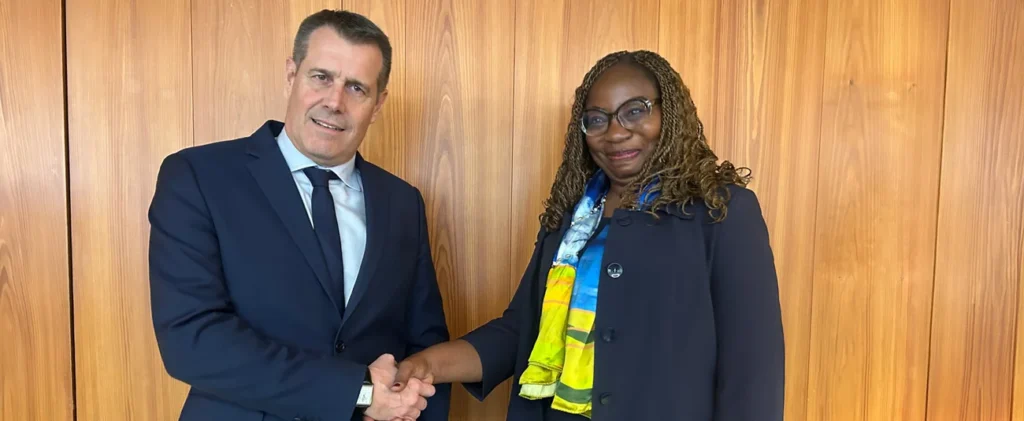
African Development Bank Group Senior Vice President, Marie-Laure Akin-Olugbade, joined a panel on “Private-Sector Partnerships in Humanitarian Contexts” held from 26 to 27 February 2026 at the Geneva International Conference Centre.
Ambassador Pietro Lazzeri, Head of the Economic Cooperation and Development Division at the Swiss State Secretariat for Economic Affairs and the Bank’s governor for Switzerland, moderated the session.
He stressed the need for greater private-sector engagement in humanitarian solutions amid declining global resources, asking: “How do we get the private sector involved in the solutions?”
Participants emphasised that private-sector involvement must respect humanitarian principles and complement, rather than replace, cooperation with states. Ms Akin-Olugbade noted that behind every crisis lie collapsing markets and lost jobs.
“In Africa, where nearly 80 per cent of the population works in the private sector, businesses play a critical role in prevention, stabilisation and recovery,” she said.
Ms Akin-Olugbade highlighted the Bank Group’s approach, which is designed to complement humanitarian actors by intervening at the right time with appropriate financial instruments.
In Madagascar, the Transition Support Facility has provided over 300 very small and medium-sized enterprises with access to previously unavailable financing.
In Sudan, collaboration with the DAL Group has helped stabilise agricultural value chains despite ongoing conflict. Partnerships in the Sahel with the International Committee of the Red Cross illustrate how financial tools are combined with humanitarian expertise to revive local economies, restore essential services and reduce the risk of renewed crises.
The panel concluded that the private sector should not be viewed merely as a donor. Its expertise and capacity for innovation make it a full partner in humanitarian action, provided that collaboration is responsible, structured and grounded in local realities.