AfDB Dialogue Highlights Justice as Key to Women’s Economic Empowerment in Africa
A high-level dialogue hosted by the African Development Bank Group has highlighted the importance of access to justice, legal reforms and economic opportunities in advancing women’s empowerment across Africa.
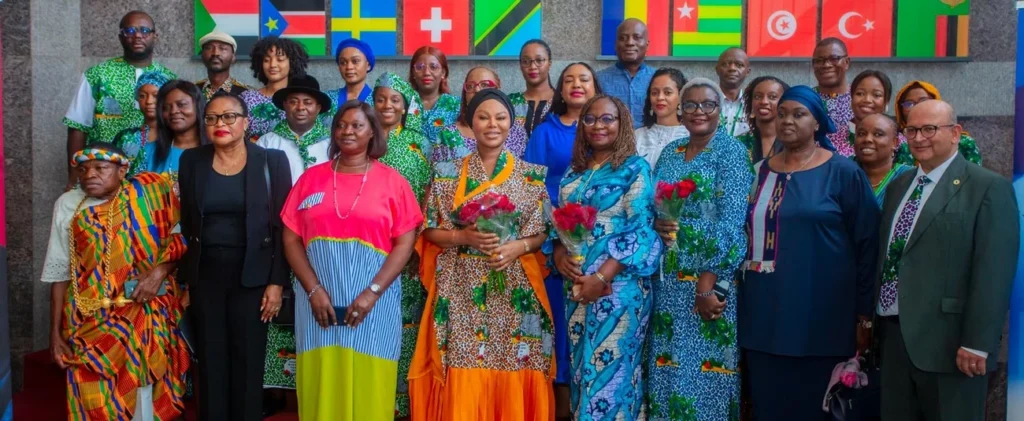
The event, titled “Justice for Her: Rights, Justice and Women’s Economic Empowerment in Africa,” was held at the Bank’s headquarters to mark International Women’s Day 2026. It brought together policymakers, justice professionals, development practitioners, traditional leaders, entrepreneurs and students to discuss how legal systems and institutional safeguards influence women’s participation in economic life.
The dialogue launched the Bank’s month-long “Gender in Focus” series, which examines how development projects impact women, girls and communities across the continent.
Addressing participants, Nassénéba Touré, Côte d’Ivoire’s Minister of Women, Family and Children, said women’s rights are central to Africa’s economic progress.
“Africa’s development cannot accelerate sustainably if half of its potential remains underutilised. And that potential is African women,” she said.
Senior Vice-President Marie-Laure Akin-Olugbade and Gender Director Jemimah Njuki also addressed the gathering, highlighting persistent structural barriers that limit women’s economic opportunities across the continent.
Participants noted that women’s economic empowerment is closely linked to access to legal protection and functioning justice systems. In many African countries, women continue to face challenges in accessing land ownership, financial services and legal support.
Akin-Olugbade said promoting women’s rights is fundamental to national development and economic competitiveness.
“When women cannot access land, finance or legal protection, economies as a whole pay the price through lost productivity and slower growth,” she said.
The discussion also highlighted the need for legal and policy reforms to expand women’s economic participation. Touré pointed to reforms undertaken in Côte d’Ivoire aimed at strengthening women’s rights, including legislation addressing gender-based violence and promoting women’s political representation.
Despite such progress, experts said women entrepreneurs still face significant barriers. According to Njuki, women-owned businesses across Africa face an estimated US$1.4 trillion financing gap, largely due to limited asset ownership and difficulties accessing collateral.
Entrepreneurs shared firsthand experiences during a panel discussion. Anasthasie Kouadio, President of the Union Vivrière Etraikpa de Toumodi women’s cooperative, said rural women farmers often struggle to obtain loans and other financial support from commercial banks.
She noted that initiatives such as the Bank’s Affirmative Finance Action for Women in Africa (AFAWA) programme are helping thousands of women-led businesses access finance and entrepreneurial support.
Speakers also stressed that although many African countries have adopted laws promoting gender equality, a gap remains between policy and practice. Fatou Diakité, President of the Association of Magistrates of Côte d’Ivoire, said legal rights do not always translate into real outcomes.
She cited Côte d’Ivoire as an example where women hold only about 12 per cent of registered land certificates, demonstrating how legal provisions do not always result in actual ownership.
Community leaders also have a role to play in advancing women’s rights. Traditional leader Danho Akradji highlighted the influence of local leadership in promoting economic inclusion and protecting women’s rights at community level.
During the discussion, Dilys Asuagbor, Head of Ethics at the African Development Bank Group, emphasised the role of development institutions in strengthening justice systems and ensuring gender-responsive governance.
Closing the session, Ramzi Ali, Director of Staff Welfare Services, Compensation and Employment Policy at the Bank, said development institutions have a broader responsibility to support equal access to justice and economic opportunity for women.
Participants agreed that improving legal protection, strengthening institutions and expanding financial access are essential steps towards unlocking the full economic potential of African women and accelerating inclusive growth across the continent.