Zambia Charts Path to Greener Skies with First SAF Workshop
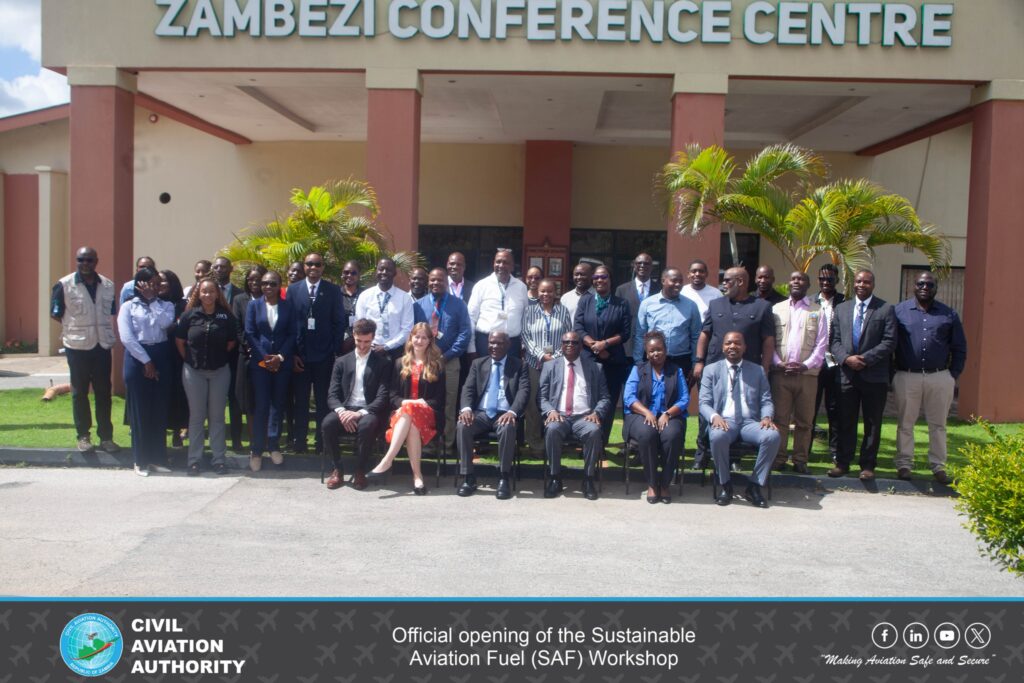
The Republic of Zambia has reaffirmed its commitment to transitioning the aviation sector toward sustainable, low-carbon operations with the official opening of the country’s first Sustainable Aviation Fuel (SAF) Workshop in Lusaka.
Speaking on behalf of the Permanent Secretary at the Ministry of Transport and Logistics, Paul Mulola, Assistant Director – Aviation, highlighted that aviation is at a decisive turning point as environmental compliance under the International Civil Aviation Organization (ICAO) framework is now mandatory for all member states.
“Aviation contributes about 2 to 3 percent of global carbon dioxide emissions, and compliance with ICAO standards is no longer optional. Zambia must integrate these requirements to safeguard its credibility and continued participation in the global air transport network,” he said.
Mr. Mulola noted that mechanisms such as ICAO’s Net Zero 2050 Vision and the Carbon Offsetting and Reduction Scheme for International Aviation (CORSIA) provide structured systems for monitoring, reporting, and offsetting emissions.
He added that Sustainable Aviation Fuel offers the most immediate and practical pathway to decarbonising the sector, with lifecycle emission reductions of up to 80 percent and without requiring modifications to existing aircraft or infrastructure.
“For Zambia, which relies entirely on imported jet fuel, SAF is not merely an environmental obligation but a strategic economic opportunity. We must decide whether to remain passive consumers or position ourselves competitively within the emerging sustainable fuel market,” Mr. Mulola said.
Speaking at the event, Harriet Nakazwe Angetile, Director of Airport Services at the Civil Aviation Authority of Zambia, described the workshop as a significant milestone for Zambia’s aviation industry.
She emphasised that the gathering of government officials, regulators, industry stakeholders, and international experts reflects the country’s commitment to advancing sustainable aviation initiatives.
“This workshop marks an important step forward. Beyond meeting environmental obligations, Sustainable Aviation Fuels present business opportunities for stakeholders and a pathway to modernise and strengthen the aviation industry,” Mrs. Angetile said.
The SAF workshop is expected to guide Zambia’s aviation sector toward meeting international environmental standards, exploring economic opportunities, and preparing for the global shift to low-carbon fuels.