Abidjan-Lagos Highway Set to Transform West African Trade and Connectivity
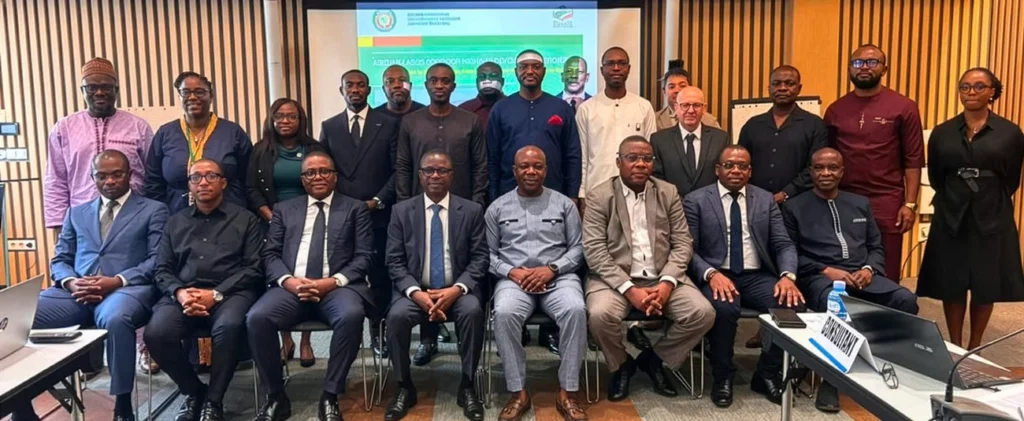
The Mega Abidjan-Lagos Corridor Project has entered its operational phase following the induction of the 10-member Board of Directors of the Abidjan-Lagos Corridor Management Authority (ALCoMA).
The event was marked by a two-day orientation and information session held in Abidjan from 19 to 20 February 2026, jointly organised by the Economic Community of West African States (ECOWAS) and the African Development Bank Group (AfDB).
The session introduced board members to the Corridor Treaty, which outlines the project’s vision, supranational status, and strategic objectives endorsed by the Heads of State of Côte d’Ivoire, Ghana, Togo, Benin, and Nigeria.
Participants also reviewed technical studies of the planned 1,028-kilometre highway and discussed trade facilitation, spatial development initiatives, logistics systems, value chains, and anchor economic hub projects.
The Board examined the institutional and legal framework governing the corridor, including intergovernmental agreements and draft international instruments establishing both the highway and its management authority. Members also reviewed their rules of procedure, charter, and the recruitment process for the Director General, administrators, and technical staff.
Chris Appiah, Director of Transport at ECOWAS, highlighted the integrated economic corridor model, combining infrastructure development with trade facilitation and socio-economic advancement.
He urged all stakeholders “to spare no effort to make this project a reality in the near future,” emphasising that a seamless cross-border highway would accelerate regional development.
Mike Salawou, Director for the Infrastructure and Urban Development Department at the African Development Bank Group, praised ECOWAS and participating countries for operationalising the Authority and reaffirmed the Bank’s role as lead arranger.
He noted that the Bank would work with the ECOWAS Bank for Investment and Development (EBID) and other partners to mobilise financing for the corridor.
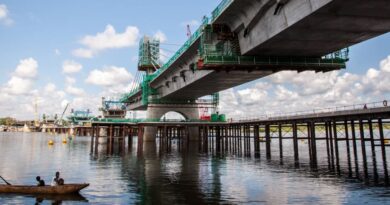
As part of the session, delegates visited Abidjan’s fourth-largest bridge project, which has eased congestion for residents of Yopougon, the country’s most populous municipality with around two million inhabitants.
The AfDB mobilised €600 million for the project, supported by €103 million from the Japan International Cooperation Agency (JICA) and €6.4 million from the Global Environment Facility (GEF).
Stretching over 1,028 kilometres, the Abidjan-Lagos Corridor Highway is envisioned as a transformative regional infrastructure linking five West African economies. By 2030, it is expected to serve as a key driver of industrial growth, trade, and socio-economic development.
The African Development Bank Group has provided $25 million in early-stage support and technical assistance, helping prepare the project for full implementation.