Zambia Charts Prudent Path on Public Debt, Government Affirms
The Government of Zambia has provided a detailed update on the nation’s public debt, outlining steps being taken to manage borrowing responsibly while supporting economic growth and development.
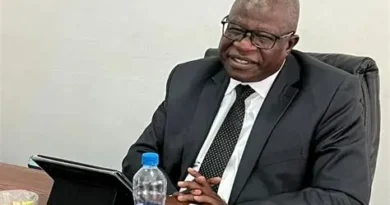
The statement, delivered by Dr Situmbeko Musokotwane, MP, Minister of Finance and National Planning, comes amid growing public interest in the country’s fiscal position.
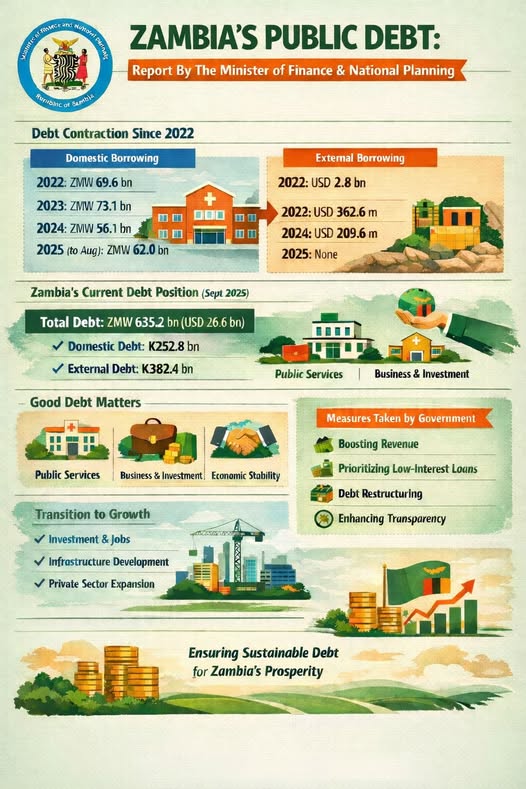
Between January 2022 and August 2025, Zambia contracted both domestic and external debt to meet fiscal obligations, refinance maturing liabilities, and support essential public services. Domestic borrowing rose from approximately K69.6 billion in 2022 to K73.1 billion in 2023 before falling to K56.1 billion in 2024, with a slight increase to K62.0 billion by August 2025.
External borrowing, which included USD 2.8 billion in 2022 largely linked to energy-sector restructuring and multilateral support, declined sharply in subsequent years, with no external borrowing recorded in 2025.
Minister Musokotwane emphasised that the 2022 external borrowing figure reflected a clean-up of legacy obligations rather than new large-scale spending. “This distinction demonstrates the deliberate shift towards debt stabilisation, transparency, and sustainability,” he said.
As of September 2025, Zambia’s total public debt stood at K635.2 billion (approximately USD 26.6 billion), comprising K252.8 billion in domestic debt and K382.4 billion in external debt. The Government highlighted that responsible debt management is critical for citizens, businesses, and investors, as it underpins fiscal stability, interest rate predictability, and long-term investment confidence.
The Government has implemented a five-pillar strategy to ensure debt sustainability: strengthening domestic revenue mobilisation, prioritising concessional financing, fiscal consolidation, engaging in debt restructuring and reprofiling, and enhancing transparency and monitoring. These measures are already improving investor sentiment and supporting economic recovery.
Looking ahead, Minister Musokotwane stated that Zambia is transitioning from economic stabilisation to growth, with a focus on investment attraction, job creation, infrastructure development, and private sector-led expansion.
He reassured citizens that borrowing is being managed within a structured Medium-Term Debt Management Strategy designed to keep debt sustainable and aligned with economic capacity.
The Minister also highlighted the importance of Parliamentary oversight through the Annual Borrowing Plan, which ensures all borrowing proposals are scrutinised, approved, and aligned with fiscal sustainability, development priorities, and economic growth objectives.
“Responsible borrowing is about using debt strategically to invest in infrastructure, energy, agriculture, education, and productive sectors that expand the economy and create jobs,” Minister Musokotwane said. “Anchored in transparency, Parliamentary approval, and prudent management, debt becomes an instrument of national development rather than a burden on future generations.”
The Government reaffirmed its commitment to policies promoting prudent fiscal management, debt sustainability, and inclusive economic growth.