Gov’t Releases K23.2 Billion in January to Sustain Services and Drive Growth
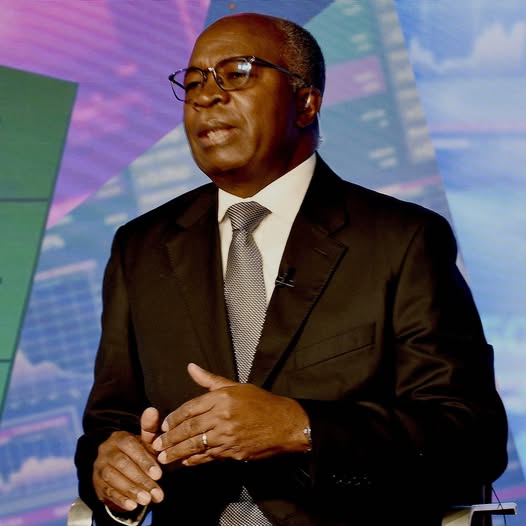
The Government released K23.2 billion in January 2026 to keep public services running, meet financial obligations on time and sustain Zambia’s transition from economic stabilisation to growth, Minister of Finance and National Planning Dr Situmbeko Musokotwane, MP, has announced.
In a statement, Dr Musokotwane said the 2026 National Budget marks a turning point for Zambia, as it is the first to be implemented after economic stabilisation under the IMF-supported Extended Credit Facility (ECF) Programme.
He noted that after three years of fiscal discipline, reduced inflation, improved reserves and restored credibility, the Government is now focused on converting stability into growth, investment, jobs and cost-of-living relief.
The Minister emphasised that infrastructure is being treated as productive capital, as investment in roads, electricity, water supply and sanitation lowers the cost of doing business, supports value chains, attracts private investment and improves household welfare.
Of the total amount released, K4.9 billion was allocated to the public service wage bill, covering salaries and allowances for health workers, teachers, security personnel and diplomats serving abroad. Dr Musokotwane said this ensured uninterrupted service delivery in critical sectors such as health, education and security.
A further K7.4 billion was applied to debt service and arrears, reinforcing the Government’s commitment to fiscal credibility. This included K6.6 billion for domestic debt service, K310.1 million for external debt service, and K439.9 million to dismantle domestic arrears owed to suppliers.
The Government also released K7.7 billion for transfers, subsidies and social benefits aimed at protecting vulnerable citizens and supporting key institutions. This included K1.5 billion to grant-aided institutions such as hospitals and universities, K768.9 million in school grants to support the Free Education Policy, K300 million for the Constituency Development Fund (CDF), and K120.8 million for the Local Government Equalisation Fund.
Within this allocation, K4.9 billion was released to the Food Reserve Agency (FRA) to settle outstanding payments to farmers who supplied maize during the 2024/2025 crop marketing season. Dr Musokotwane stressed that the Government is not in arrears to farmers, adding that any delays reported are likely due to administrative or banking processes rather than lack of funding.
Additionally, K147.5 million was released to clear outstanding payments under the Cash for Work Programme, allowing the revised programme to restart on a clean slate in March or April 2026.
To ensure Government operations continued without disruption, K1.8 billion was released for programme implementation and general operations in line with approved work plans.
Meanwhile, K1.4 billion was allocated to capital expenditure, with K655.5 million directed to road infrastructure, K67.8 million to the Rural Electrification Authority, K201.9 million to water infrastructure projects, and K440.2 million to infrastructure development coordinated across ministries.
Dr Musokotwane said the January releases sent three key signals to citizens and markets: continuity, credibility and clean execution. He explained that essential services were maintained, financial obligations were honoured, and legacy payment backlogs were cleared to allow programmes to move forward efficiently.
He added that the approach taken in settling farmer payments and Cash for Work obligations reflects the discipline of the 2026 Budget, which aims to deliver results predictably, on time and with accountability.
“This is how Zambia moves forward—from stabilisation into a growth-oriented phase that is practical, jobs-focused and visible in everyday life,” the Minister said.