Africa Urged to Rethink US$29.5 Trillion Mineral Wealth for Industrial Growth
Africa holds an estimated US$29.5 trillion in mine site mineral value, accounting for about 20 percent of global mineral wealth, but captures only a small share of the economic returns, according to a new study by Africa Finance Corporation (AFC).
The report, launched at the Mining Indaba in Cape Town, shows that US$8.6 trillion of this value remains undeveloped due to limited geological data, uneven exploration and transparency gaps that continue to raise investment risk. AFC says improving the availability and quality of geological data is a critical first step in unlocking exploration capital.
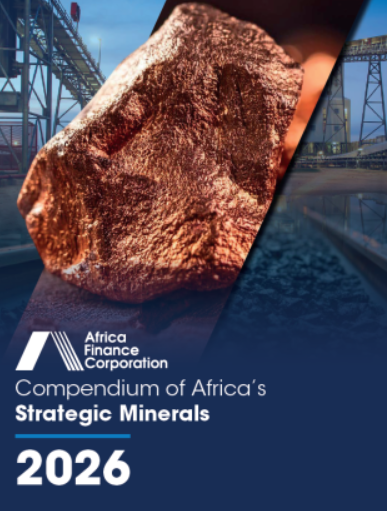
Titled Compendium of Africa’s Strategic Minerals, the study argues that mine site valuations significantly understate Africa’s true potential because they exclude the value created through processing minerals into products such as steel, aluminium, fertilisers, batteries and alloys. When assessed at the point of industrial use, Africa’s mineral endowment is far greater.
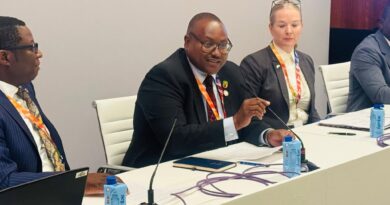
AFC President and Chief Executive Officer Samaila Zubairu said the Compendium reframes the minerals sector through an African development lens by linking reserves and production to processing capacity, power supply, transport infrastructure and regional industrial corridors.
He said this approach can help de risk projects, lower the cost of capital and guide smarter investment into beneficiation and integrated value chains.
The report highlights a persistent mismatch between mineral production, infrastructure and demand across the continent. Despite world class deposits of iron ore and ferro alloys, African supply chains remain closely tied to Asian demand cycles, exposing producers to external economic shocks.
Recent slowdowns in Asian steel demand have already affected African producers. In the Democratic Republic of the Congo, cobalt production quotas have been introduced to manage oversupply and falling prices. In South Africa, primary steelmaking capacity has closed due to weak domestic demand and high costs, while in Gabon, manganese operations have periodically suspended production.
The study stresses that Africa’s challenge is not a lack of demand, but the failure to align mineral production, processing capacity and infrastructure investment with the continent’s long term development needs.
Infrastructure is placed at the centre of mineral strategy, with the report calling for coordinated regional planning of railways, ports and cross border power transmission. Such investments, AFC says, can unlock scale, reduce costs and support competitive and lower carbon mineral value chains.
Against a backdrop of global trade tensions and shifting industrial policies, the report urges Africa to move beyond exporting raw materials and instead position itself as a reliable, value adding partner in strategic global supply chains. It points to growing momentum in rare earth development in Angola, graphite in Mozambique, battery grade manganese projects in Southern Africa, and the resumption of uranium production in Namibia and Malawi.