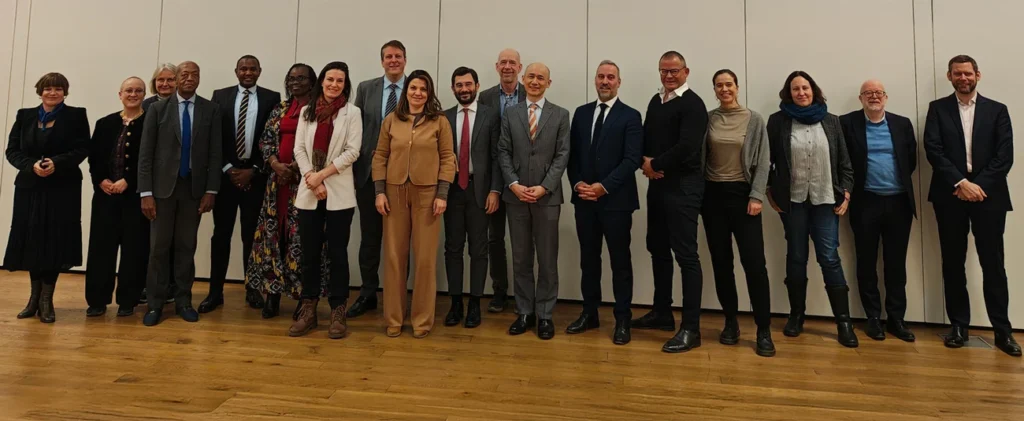
SEFA Governing Council Meets in Berlin, Commends Strong Delivery in 2025
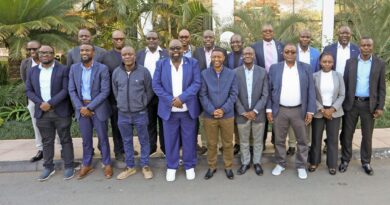
The Governing Council of the Sustainable Energy Fund for Africa (SEFA), managed by the African Development Bank (AfDB), has met in Berlin, commending the fund’s strong delivery performance in 2025, marked by record project approvals and increased donor support.
During 2025, SEFA approved 13 projects with a total value of US$97 million and mobilised US$88 million in new donor contributions, underscoring growing confidence in the fund’s role in accelerating energy access and supporting Africa’s energy transition.
The annual Governing Council meeting, hosted by Germany’s Federal Ministry for Economic Cooperation and Development (BMZ), brought together SEFA donor partners and key stakeholders to review performance in 202nd agree on priorities for 2026. Discussions centred on sustaining delivery momentum and scaling catalytic finance to unlock private sector investment in renewable energy and energy efficiency across Africa.
Ahead of the council meeting, held from 29 to 30 January 2026, BMZ and SEFA convened a technical seminar on private sector mobilisation and blended finance in the decentralised renewable energy sector. Partners and investors examined market challenges and opportunities, as well as blended finance instruments best suited to accelerating clean energy generation and expanding electricity connections.
Key areas of discussion included the use of digital technologies and artificial intelligence in capital mobilisation and emerging private sector business models, alongside the design of smart subsidies and partnerships to support early-stage project development.
The Governing Council endorsed SEFA’s 2026 Annual Work Programme and Budget, reaffirming its collective commitment to the fund’s mandate. SEFA’s portfolio now comprises 54 operations across 46 countries, with more than US$405 million committed under SEFA 2.0.
Opening the meeting, Dr Kevin Kariuki, Vice President for Power, Energy, Climate and Green Growth at the African Development Bank Group, said SEFA was demonstrating clear impact on the ground through faster approvals, increased disbursements and growing development outcomes.
Johann Saathoff, Parliamentary State Secretary at BMZ, highlighted the alignment between SEFA and Germany’s development priorities, noting that the fund sits at the intersection of multilateralism, Africa-focused cooperation, the energy transition and finance mobilisation.
The council also discussed Mission 300, the joint African Development Bank and World Bank initiative aimed at connecting 300 million people to electricity by 2030 through country-led reforms and investment programmes anchored in National Energy Compacts.
Dr Daniel Schroth, Director of Renewable Energy and Energy Efficiency at the African Development Bank Group, provided an update on Mission 300, emphasising the role of Compact Delivery and Monitoring Units and the Mission 300 Development Partners Coordination Group in improving coordination, tracking reforms and accelerating implementation.
In parallel with the Governing Council meeting, the Bank Group delegation engaged with Germany’s development cooperation institutions, including BMZ, Kreditanstalt für Wiederaufbau (KfW) and Gesellschaft für Internationale Zusammenarbeit (GIZ), to strengthen collaboration on sustainable energy.
The delegation also hosted a business opportunities seminar for German companies, showcasing Africa’s investment potential in the energy sector and pathways for private sector engagement with the African Development Bank Group.
SEFA is a multi-donor special fund that provides catalytic finance to unlock private sector investment in renewable energy and energy efficiency. Through technical assistance and concessional finance, the fund seeks to address market barriers, strengthen project pipelines and improve the risk–return profile of investments, contributing to universal access to affordable, reliable, sustainable and modern energy services across Africa.