Emirates Flight Catering launches large-scale biodigester to cut emissions
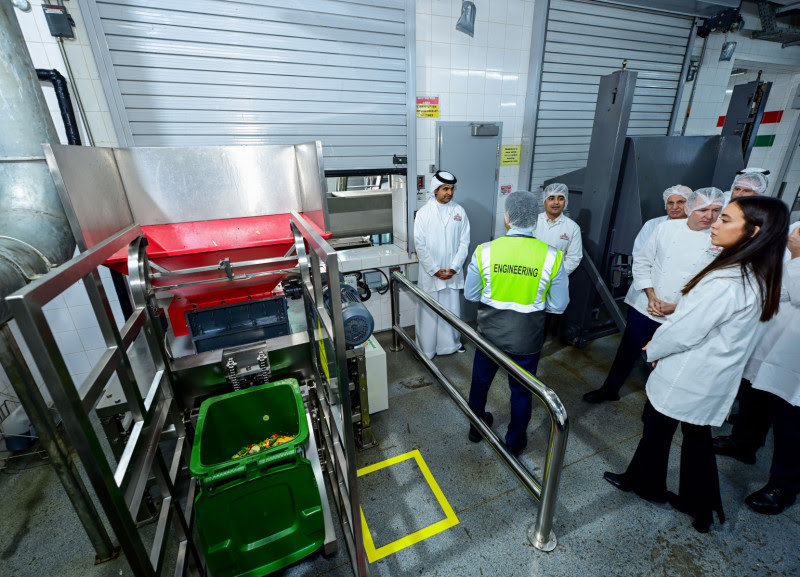
Emirates Flight Catering (EKFC) has commissioned a large-scale, custom-built biodigester at its Central Commissary Unit, marking a major step in its efforts to divert waste from landfill and reduce carbon emissions by an estimated 2,000 tonnes of CO₂e annually.
The Power Knot LFC-3000 biodigester, one of the largest of its kind in commercial scale and capacity, allows EKFC to process organic waste on site, treating it at source rather than transporting it to landfill. The system uses aerobic digestion, combining oxygen, heat and naturally occurring microorganisms to break down food waste into grey water that can be reused for non-potable purposes.
Unlike conventional mechanical systems that degrade over time, the biodigester becomes more efficient as its microbial culture matures and adapts to a wider range of organic feedstock.
EKFC Chief Executive Officer Shahreyar Nawabi said the project represents a significant operational milestone in the company’s sustainability journey.
“At EKFC, the greatest impact we can make is in how we handle waste by treating it responsibly, diverting it from landfill and finding productive ways to reuse it,” Nawabi said. “Commissioning a biodigester of this scale reflects strong cross-functional collaboration across the business and the consistent waste segregation efforts of our teams on the ground. Innovation combined with operational commitment will continue to drive our progress on sustainability.”
Since becoming operational in December 2025, throughput has increased steadily, with the system currently processing up to 3.5 tonnes of food waste per day. EKFC projects that capacity will rise to around 6 tonnes per day as the system reaches full biological maturity, subject to feedstock composition.
Using greenhouse gas conversion factors aligned with the UK Department for Environment, Food and Rural Affairs, EKFC estimates that diverting one tonne of food waste from landfill avoids approximately 0.7 tonnes of CO₂e, largely by preventing methane emissions from landfill decomposition. At full capacity, the biodigester could therefore prevent more than 2,000 tonnes of CO₂e emissions annually.
The biodigester forms part of EKFC’s broader sustainability strategy, which includes investments in renewable energy and fleet electrification. Solar panels installed across EKFC facilities generated 4,000 MWh of electricity last year, avoiding about 1,600 tonnes of CO₂e. Electric vehicles are being introduced across operations, while a proof-of-concept electric hi-loader, the first of its kind in the region, is expected by mid-2026.
EKFC has also advanced waste reduction and circularity initiatives. Nearly 75,000 kilogrammes of food waste were processed through its smaller LFC-50 biodigester last year, while packaging changes eliminated around 45,000 kilogrammes of plastic annually.
The company has developed 47 recipes using production trimmings to reduce food waste and used pesticide-free lettuce from Bustanica to prepare around 28,000 Emirates salads per day. AI-driven automation and smart camera technology further support quality control and waste reduction across production.