Zambia Hits Single-Digit Inflation, Minister Musokotwane Highlights Economic Stabilisation
Zambia has achieved a major economic milestone, with annual inflation falling to a single-digit 9.4 percent in January 2026, down from 11.2 percent in December 2025, according to the latest data from the Zambia Statistics Agency (ZamStats). This marks the lowest inflation level since early 2023.
Minister of Finance and National Planning, Dr Situmbeko Musokotwane, said the decline reflects the success of targeted government policies aimed at managing price pressures, boosting productivity, and strengthening resilience against external shocks.
“The reduction in inflation demonstrates tangible progress towards our medium-term target range of 6–8 percent, as outlined in the National Development Plan and the 2026 National Budget,” Dr Musokotwane stated.
Food inflation eased to 10.9 percent from 12.9 percent, driven by falling prices of key staples such as breakfast and roller mealie meal, maize grain, imported rice, wheat flour, fruits, vegetables, and cooking oil. The government attributed the improvement to enhanced agricultural support initiatives, including irrigation schemes, input provision, and improved supply chain logistics.
Non-food inflation also fell to 7.3 percent from 8.7 percent, aided by adjustments in fuel prices, passenger air transport, and motor vehicle costs. Fiscal measures such as prudent fuel subsidy reforms, energy efficiency investments, and a stronger Kwacha supported by foreign exchange inflows from mining exports contributed to the downward trend.
Monthly inflation in January stood at 0.5 percent, down from 1.5 percent in December 2025. While food inflation rose slightly to 0.9 percent, driven by cereals, meat, and eggs, authorities noted that the increase remained contained.
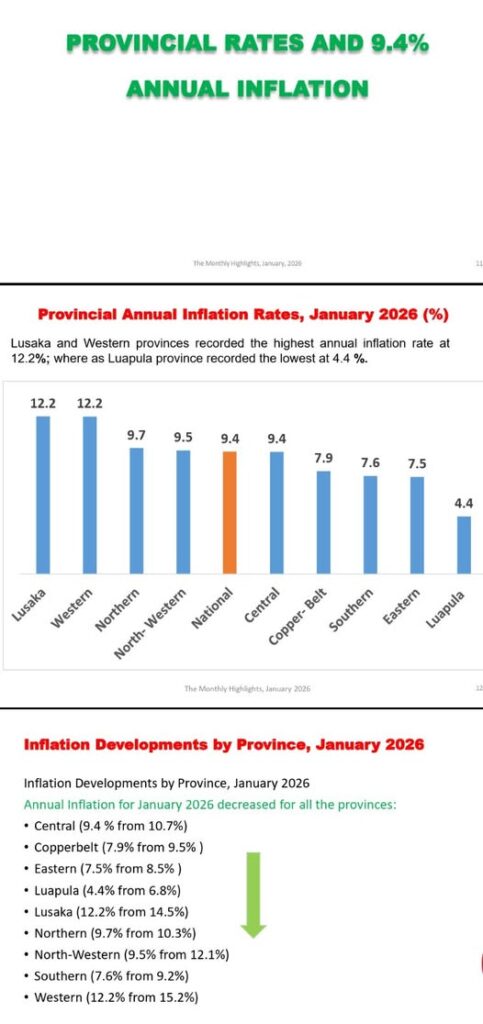
All ten provinces reported declines in annual inflation, highlighting the nationwide impact of government measures. Lusaka and Western Provinces recorded the highest rates at 12.2 percent, while Luapula Province recorded the lowest at 4.4 percent. Other provinces showed significant reductions, including Copperbelt (7.9 percent), Southern (7.6 percent), and Eastern (7.5 percent).
Dr Musokotwane emphasised that the reductions reflect tailored interventions such as mining sector reforms in Copperbelt and agricultural mechanisation in Eastern and Southern provinces, contributing to inclusive economic growth.
The Minister noted that this inflation moderation results from comprehensive fiscal and monetary reforms, structural enhancements in agriculture and energy, and a firmer Kwacha limiting imported inflation.
Looking ahead, sustained low inflation is expected to support Zambia’s projected economic growth of 6.4 percent in 2026, unlock affordable credit for SMEs, stimulate consumer spending, and attract foreign direct investment in priority sectors such as renewable energy and digital infrastructure.
Dr Musokotwane cautioned that the government would remain vigilant against potential risks, including climate-related disruptions and geopolitical tensions, while continuing social protection programmes.
“These inflation developments are a testament to the resilience of the Zambian people and the strategic vision of the Government. We are on a steadfast path to economic stabilisation that paves the way for inclusive, sustainable growth,” he said.
The full ZamStats report is available at www.zamstats.gov.zm.