
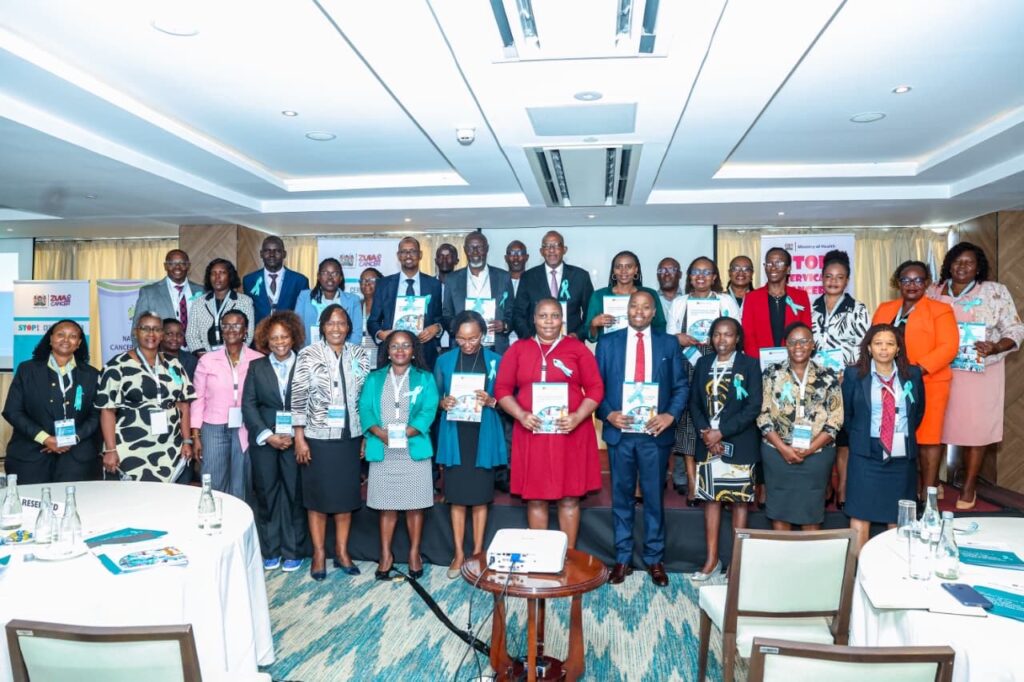
Kenya Launches Five-Year Action Plan to Eliminate Cervical Cancer
The Government of Kenya has launched the National Cervical Cancer Elimination Action Plan 2026–2030, a five-year strategy developed with support from the World Health Organization (WHO) to accelerate the prevention, early detection and treatment of cervical cancer.
Cervical cancer remains the second most common cancer among women in Kenya, with an estimated 5,845 new cases and 3,600 deaths each year. Globally, the disease is the fourth most common cancer among women, accounting for about 660,000 new cases and 350,000 deaths annually, with 90 percent occurring in low- and middle-income countries. Africa bears nearly a quarter of global cervical cancer deaths, largely due to late diagnosis and limited access to preventive services.
The Action Plan aligns with WHO’s global cervical cancer elimination targets (90–70–90), which aim to ensure that 90 percent of girls are fully vaccinated against human papillomavirus (HPV) by age 15, 70 percent of women are screened with a high-performance test by ages 35 and 45, and 90 percent of women diagnosed with cervical disease receive appropriate treatment and care. The plan is costed, results-driven and places strong emphasis on equity, quality and nationwide scale-up.
The strategy builds on Kenya’s national HPV vaccination programme, introduced in 2019. In November 2025, Kenya adopted a single-dose HPV vaccination schedule, in line with WHO recommendations, to simplify service delivery and improve coverage. During the transition, WHO supported the Ministry of Health in training more than 11,000 health workers nationwide, strengthening capacity for vaccine delivery and cervical cancer services.
The Action Plan prioritises the integration of cervical cancer services into primary health care, including through the ongoing Women Integrated Cancer Services (WICS) project. Implemented in Nyandarua and Bungoma counties with WHO support, WICS provides integrated screening for cervical and breast cancer, as well as common non-communicable diseases such as hypertension, diabetes and mental health conditions, targeting at least 10,000 women.
Additional priorities include expanding access to HPV DNA testing, introducing self-sampling to increase screening uptake, strengthening referral systems, and leveraging digital health tools to extend services to women across all 47 counties.
Speaking on behalf of WHO Representative to Kenya, Dr Neema Rusibamayila Kimambo, Dr Boston Zimba said the Action Plan demonstrates Kenya’s strong commitment to eliminating cervical cancer as a public health threat.
He emphasised that coordinated action across prevention, screening and treatment will ensure that every woman, regardless of location, has access to life-saving cervical cancer services.