Zambia Charts a New Path to Fertiliser Self-Sufficiency
How strategic African Development Fund support is reducing Zambia’s dependence on imported fertiliser and strengthening food security
Zambia is emerging as a continental model for agricultural resilience after turning a global crisis into an opportunity to transform its fertiliser and food production systems.
The Russia–Ukraine conflict in February 2022 sent shockwaves through global supply chains, triggering sharp spikes in fertiliser prices and severe shortages across Africa. For Zambia, the impact was immediate and stark. The country was importing more than US$110 million worth of fertiliser annually from Russia and Ukraine, yet still faced a shortfall of over 632,000 metric tonnes during the 2022 planting season.
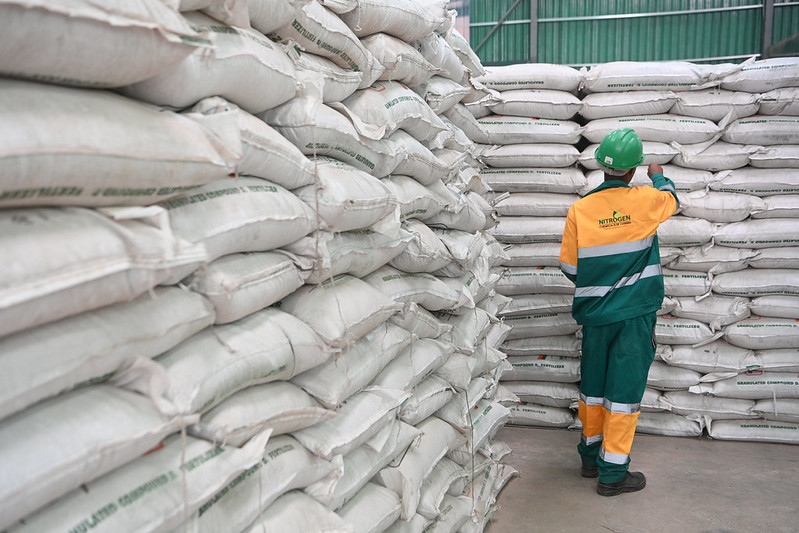
At the time, domestic production was struggling to meet demand. Nitrogen Chemicals of Zambia (NCZ), the country’s long-standing state-owned fertiliser producer, was operating with outdated equipment and an annual production capacity of just 70,000 metric tonnes — far below national needs.
Rather than viewing the crisis as a setback, the African Development Fund (ADF), the concessional arm of the African Development Bank Group, identified it as a turning point.
In July 2022, the African Development Bank Group approved US$14.73 million under the Zambia Emergency Food Production Facility (ZEFPF), a programme designed not only to stabilise food production in the short term but to fundamentally reshape Zambia’s agricultural ecosystem.
A key component of the intervention was a US$1.25 million grant to NCZ for raw materials to kick-start production at a newly constructed US$5.5 million blending and granulating plant.
“The support from the African Development Fund came at exactly the right time,” said Chanda M. Mongo, Chief Executive Officer of Nitrogen Chemicals of Zambia. “It made possible the commissioning of our state-of-the-art plant. This is a truly transformational investment for our nation.”
The results have been dramatic. NCZ’s production capacity increased from 70,000 metric tonnes to 432,880 metric tonnes by 2025 — a six-fold leap. Combined with two newly commissioned private sector fertiliser plants, Zambia is now on track to achieve full fertiliser self-sufficiency by 2026, with prices expected to fall by up to 40 per cent.
This rapid expansion represents more than increased output; it marks a structural shift in Zambia’s fertiliser industry from import dependence to domestic capacity.
The ZEFPF extended well beyond fertiliser production. The ADF adopted an ecosystem-wide approach to agriculture, investing in research, extension services, and farmer financing.
The Zambia Agriculture Research Institute (ZARI) received modern soil-testing equipment, while 300 agricultural extension officers were equipped with motorbikes and tablets to improve outreach and promote climate-smart and good agricultural practices. An additional 300 officers were trained in precision farming through the International Institute of Tropical Agriculture.
“The new equipment and training have significantly reduced turnaround times for soil analysis,” said Brian Gondwe, Head of ZARI’s Soil Chemistry Laboratory. “We now clearly understand what nutrients our soils lack and can guide farmers more effectively.”
The project also launched a pilot Sustainable Agriculture Finance Facility worth US$5.6 million, later scaled up by the Zambian government to US$30 million. More than 18,000 smallholder farmers have accessed loans, while 1,700 agro-dealers have been engaged, creating over 5,000 jobs.
For farmers like Grace Nyirongo Phiri, the impact has been life-changing. With ADF-backed financing, she installed drip irrigation, a borehole, and solar-powered pumps on her smallholding, increasing her yields by 35 per cent.
“Drip irrigation minimises water use and ensures uniform irrigation,” she explained. “The crops grow better and the results are clear.”
Grace is one of more than 25,000 direct beneficiaries of the programme. “We small-scale farmers are being lifted step by step,” she said.
The agricultural transformation is now being felt across the wider economy. Zambia’s maize production has risen to 3.7 million metric tonnes, well above national consumption of 2.5 million metric tonnes. The resulting surplus of 1.2 million metric tonnes positions the country as a net food exporter within the region.
Through advanced soil testing and customised fertiliser blends, farmers are now applying inputs tailored to their specific crops and soils, leading to higher yields, healthier harvests, and stronger incomes.
“Our production capacity has risen from 70,000 to 432,880 metric tonnes per year,” said Mongo. “This is not just a statistic. It means greater reach, greater impact, and greater hope for Zambia’s farmers.”
As Zambia moves steadily towards fertiliser self-sufficiency and regional food leadership, the ZEFPF stands as a powerful example of how targeted development financing can help African countries chart their own path to food security.
“The African Development Fund intervention has been life-changing for Zambia,” Mongo said.