270MW Thermal Plant to Accelerate Zambia’s Energy Sufficiency
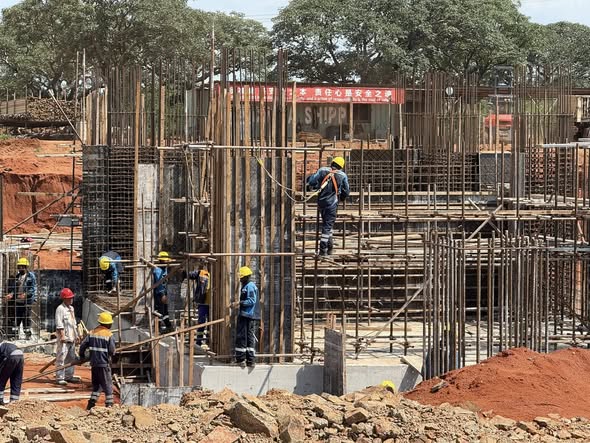
Earth-moving machinery is transforming 120 hectares of land in Livingstone District, Southern Province, where a 270MW thermal power plant is under construction in the area of His Royal Highness Chief Mukuni. The project is expected to significantly boost Zambia’s energy sufficiency and enhance security of supply.
The plant is owned by Guoli Zambia Energy Limited and forms part of a growing portfolio of government- and private sector-led energy investments aimed at addressing the country’s electricity deficit. Beyond power generation, the project is contributing to socio-economic development by creating about 400 jobs for local residents.
In 2025, ZESCO Limited signed a 25-year Power Purchase Agreement (PPA) with Guoli Zambia Energy Limited, making the national utility the sole off-taker of electricity generated by the plant.
On 10 January 2026, ZESCO Board Chairperson Vickson Ncube toured the construction site, where he confirmed that phase one of the project is expected to be completed by October 2026, with phase two scheduled for completion in June 2027.
Mr Ncube said the project is a key step towards the Government’s target of delivering 2,500MW of thermal power generation within the next three years.
“President Hakainde Hichilema mentioned that we have a target of thermal plants that will give us 2,500MW of electricity in the next three years. The President was speaking from an informed position, and one of the steps taking us there is the Guoli Energy Zambia Limited project,” Mr Ncube said.
He explained that 135MW of electricity is expected to be connected to the national grid by October 2026, with the remaining 135MW coming online by mid-2027.
“Before the end of 2026, this plant will give us 135MW, and by mid-2027 another 135MW. That is 270MW from this project alone. When we add existing plants such as Maamba Energy’s 300MW facility and others in the pipeline, we move closer to the 2,500MW target,” he said.
Zambia has, over the past 22 months, pursued an energy diversification agenda aimed at building a climate-resilient power system, with solar energy playing a leading role.
In December 2025, ZESCO advanced President Hichilema’s ambition of achieving energy security by targeting 1,000MW of solar power. The utility broke ground on four solar projects scheduled to come online in 2026—Kafue Gorge Lower (100MW), Siavonga (100MW), Choma (35MW) and Chisamba (100MW). Meanwhile, the Mansa 50MW solar project has already delivered initial power into the grid, with full commissioning planned for early this year.
Mr Ncube said Zambia’s energy diversification strategy is being implemented in phases.
“We categorise our movement towards energy diversification into three stages: immediate, short-term and medium-term. In the immediate term, rooftop solar provides instant relief from load shedding. In the medium term, the 2,500MW target comes into play over the next three years,” he said.
He further urged the private sector to partner with government in addressing the electricity deficit.
“This project is a clear example of effective private sector participation. The plant is 100 per cent privately owned, and ZESCO will purchase the power. This is how partnerships between government and the private sector should work,” Mr Ncube said.
However, he acknowledged challenges affecting the energy sector, particularly in the transportation and clearance of critical equipment.
“Our cheapest route is through Dar es Salaam, but there are hurdles in clearing equipment from the port. The clearance mechanism is congested,” he noted.
Mr Ncube called for presidential intervention to help fast-track the process.
“We believe that government-to-government engagement can help. When we explain to the President that we need assistance in speeding up the clearance of equipment for this plant, I am confident he can intervene,” he said.