
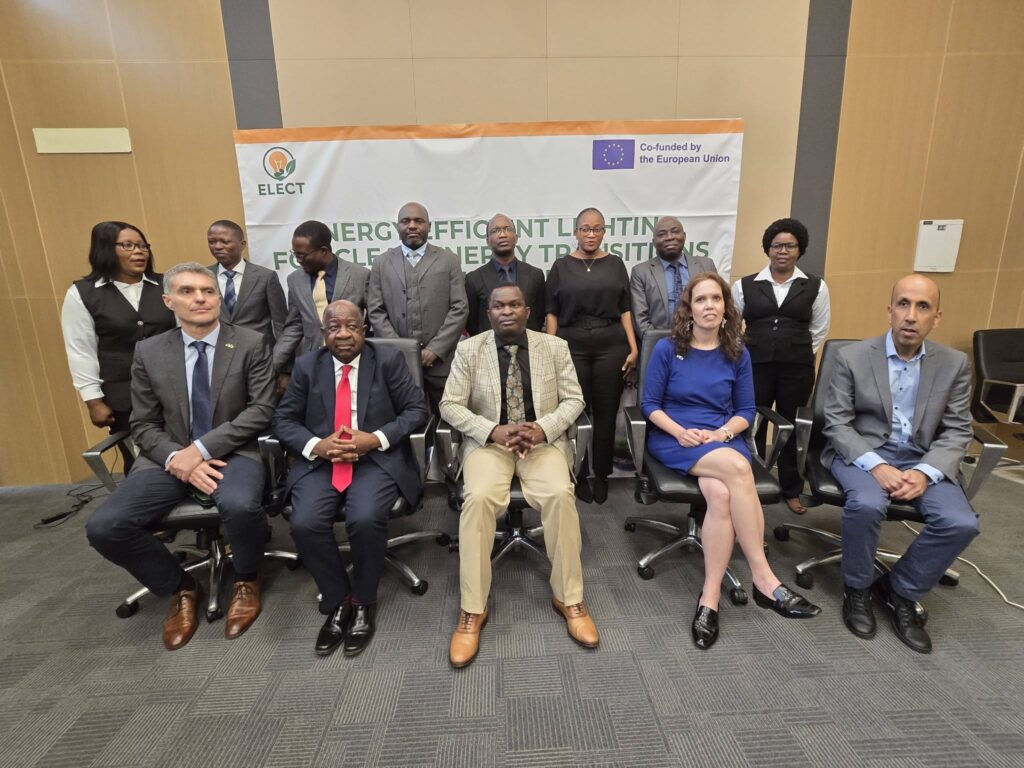
Zambia Launches ELECT Project to Drive Energy Efficiency and Clean Energy Transition
The Zambian Government, working alongside academia and international cooperating partners, has launched the Energy Efficiency Lighting for Clean Energy Transition in Zambia (ELECT) Project, an initiative aimed at improving energy efficiency, building local skills and supporting the country’s transition to clean and sustainable energy.
Speaking at the launch, Minister of Energy Mr Makozo Chikote, in remarks delivered on his behalf by Ministry of Energy Permanent Secretary for Electricity, Engineer Arnold Simwaba, said the ELECT Project marks a decisive move from policy to action.
Mr Chikote noted that while Government continues to invest in expanding electricity generation and diversifying the energy mix, demand-side measures such as energy-efficient lighting are critical in easing pressure on the national grid, reducing electricity costs for consumers and improving overall system reliability.
He said the project aligns closely with the National Energy Policy of 2019 and the Energy Efficiency Strategy and Action Plan of 2022, reinforcing Government’s commitment to sustainable energy development.
The Minister also stressed the importance of human capital development, stating that technology alone cannot deliver a sustainable energy system. He said the ELECT Project will strengthen university programmes, modernise training methods and enhance applied research, helping to develop the skills and institutional capacity required for Zambia’s clean energy transition.
Mulungushi University Vice-Chancellor Professor Royson Mukwena thanked the European Union for financing the project and said the initiative is well aligned with national development priorities.
He highlighted the role of universities in sustaining development projects by producing industry-ready graduates and generating research that supports policy and innovation.
Professor Mukwena reaffirmed the university’s commitment to working with all partners to build technical capacity and support long-term human capital development.
Finnish Ambassador to Zambia, Her Excellency Ms Saana Halinen, said the ELECT Project will be implemented over a three-year period and is expected to foster innovation, collaboration and strong partnerships between academia, industry and policymakers.
European Union Representative Mr Massimo Bonannini pledged continued EU support, emphasising that energy-efficient lighting is key to addressing Zambia’s slow electrification rate and to building a more reliable, resilient and sustainable energy sector.