Zambia to Conclude IMF ECF, Prioritise Growth and Jobs
Zambia will conclude its current International Monetary Fund (IMF) Extended Credit Facility (ECF) programme and immediately begin engagement on a successor arrangement that places stronger emphasis on economic growth, investment and job creation, Minister of Finance and National Planning Situmbeko Musokotwane has announced.
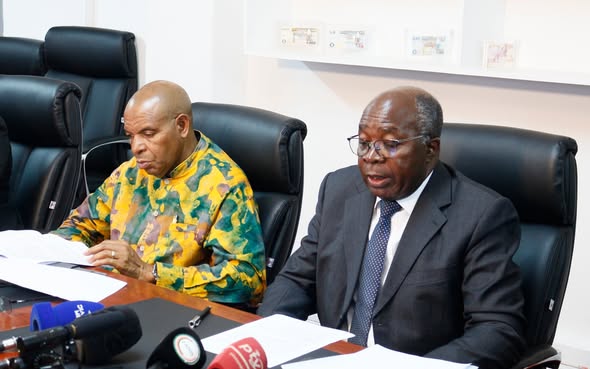
In a statement issued in Lusaka, Dr Musokotwane clarified Government’s position as the country enters the final phase of the IMF-supported programme, which commenced in 2022.
He confirmed that Zambia has opted not to pursue a previously anticipated one-year extension of the existing ECF, choosing instead to transition to a new full-term arrangement aligned with evolving national priorities.
The Minister said Government’s immediate priority is the conclusion of the sixth and final review of the current programme, after which discussions will begin with the IMF on a successor framework. While the new arrangement will continue to support the completion of Zambia’s external debt restructuring, it will also address broader medium-term development needs, particularly the acceleration of economic growth.
Dr Musokotwane stressed that the decision not to extend the existing programme should not be viewed as disengagement from the Fund or a reversal of reforms, but rather as the successful completion of the programme and a transition to a new phase of cooperation.
He explained that the brief extension of the current arrangement from November 2025 to the end of January 2026 was a technical measure to allow time for assessment of programme performance as at end-October.
He noted that Zambia has completed all programme reviews without interruption since 2022, with a staff-level agreement on the sixth and final review reached in December. The review is now subject to consideration and approval by the IMF Executive Board, in accordance with established procedures.
The Minister said Zambia’s performance under the ECF has been strong, with all key quantitative targets and structural benchmarks met. This record has supported macroeconomic stabilisation, including sustained fiscal consolidation, with primary fiscal surpluses exceeding two per cent of GDP, and improved confidence in public financial management.
He added that the reforms have strengthened economic resilience, supported progress on debt restructuring and enabled the country to benefit more fully from favourable copper prices by reviving mining operations and expanding production capacity.
Looking ahead, Dr Musokotwane said Government’s focus is on leveraging macroeconomic stability to attract investment, expand productive capacity and create jobs. Engagement with the IMF on a successor arrangement will therefore prioritise growth-oriented structural reforms, value addition, investment mobilisation and inclusive economic opportunities.
He assured stakeholders that policy continuity will be maintained during the transition period through adherence to the approved national budget, disciplined borrowing and expenditure within Parliament-approved limits. Zambia will also continue to engage closely with the IMF through Article IV consultations and technical dialogue.
The Minister reaffirmed Government’s commitment to debt sustainability, prudent fiscal management, transparent use of public resources, strengthened domestic revenue mobilisation and inclusive growth. He emphasised that the reform agenda is nationally owned and not dependent on any single external arrangement.
Dr Musokotwane expressed appreciation to the IMF’s staff, management and Executive Board, as well as to President Hakainde Hichilema, the Vice President, Cabinet, Parliament and key economic institutions for supporting the reform programme.
Zambia, he said, remains committed to constructive engagement with the IMF and development partners as it works towards a more prosperous, resilient and inclusive economy.