Merck Foundation Launches “Ray of Hope” Storybook and Animation to Promote Early Cancer Detection in Children
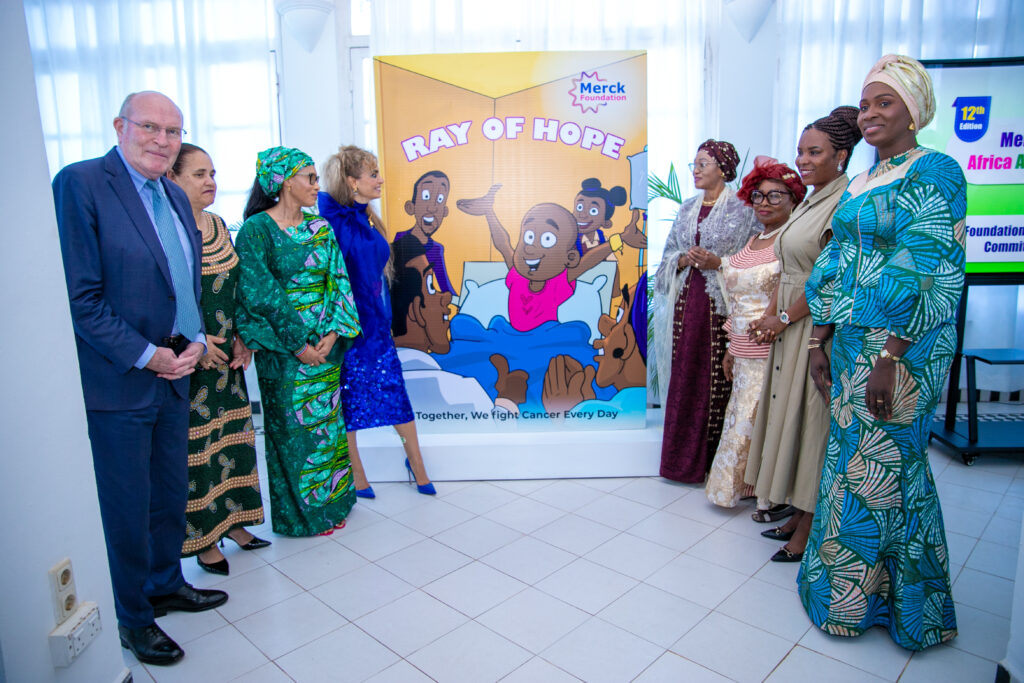
Merck Foundation, the philanthropic arm of Merck KGaA, Germany, in partnership with African and Asian First Ladies, has launched a new children’s storybook and animated film titled “Ray of Hope”, aimed at raising awareness about cancer prevention and early detection, with a special focus on childhood cancer.
The storybook and its animation adaptation were officially launched by Merck Foundation Chairman and Chief Executive Officer, Senator Dr Rasha Kelej, together with the First Ladies of Burundi, Central African Republic, The Gambia, Liberia, Nigeria, São Tomé and Príncipe, and Senegal.
The launch took place during the Merck Foundation First Ladies Initiative (MFFLI) Committee Meeting, held as part of the 12th Edition of the Merck Foundation Africa Asia Luminary in The Gambia.
Speaking at the launch, Dr Kelej said the initiative reflects the Foundation’s commitment to improving cancer awareness and access to quality care across Africa and Asia.
“I am very proud to release our new children’s storybook and animation film on cancer awareness, in partnership with my dear sisters, African First Ladies,” Dr Kelej said. “Childhood cancer is one of the most difficult journeys, not only for young patients but also for their families and communities. Yet with early detection and timely treatment, many paediatric cancers are treatable, offering children the possibility of a longer and healthier future.”
She emphasised that strengthening cancer care capacity remains a core pillar of Merck Foundation’s strategy, including a strong focus on paediatric oncology training for healthcare professionals.
The storybook, “Ray of Hope”, follows the journey of a young girl named Hope, who faces cancer with courage, resilience and optimism. Through storytelling, the book highlights the importance of recognising early warning signs, accessing timely medical care and relying on well-trained cancer care teams.
“These signs should never be ignored, as early detection saves lives,” Dr Kelej added.
Cancer has become a major public health challenge in sub-Saharan Africa and is among the three leading causes of premature death in the region. According to Dr Kelej, nearly two-thirds of cancer cases can be treated if diagnosed early, while up to one-third can be prevented by reducing risk factors such as infections, radiation exposure and lifestyle-related causes.
As part of its Cancer Access Programme, Merck Foundation has provided 239 scholarships to healthcare providers from 35 countries, supporting the development of multidisciplinary oncology care teams across Africa. The training covers a wide range of oncology sub-specialties, including medical, surgical and paediatric oncology, gynaecological oncology, breast oncology, haemato-oncology, radiation oncology, pathology, palliative care, oncology nursing, laboratory and radiation technology.
In addition, the Foundation offers postgraduate diplomas and master’s degrees in cancer and clinical oncology, medical oncology and pain management through leading UK universities, including the University of South Wales, University of Buckingham, Queen Mary University of London and Cardiff University.
“We are proud to be making history in Africa by training the first oncologists and building the first cancer care teams in several countries, ensuring patients receive the care they deserve,” Dr Kelej said.
Overall, Merck Foundation has awarded more than 2,500 scholarships to doctors from 52 countries across 44 critical and underserved medical specialties.
The “Ray of Hope” storybook and animation film are currently available on Merck Foundation’s website and social media platforms and will soon be distributed across partner countries. Each edition includes a special message from Dr Kelej and participating African and Asian First Ladies and is published in English, French and Portuguese to reach young readers across diverse communities.
Merck Foundation has previously launched several children’s storybooks and animated films addressing key health and social issues, including infertility stigma, girls’ education, child marriage, domestic violence, diabetes and hypertension, using storytelling and animation as powerful tools to educate, inspire and build healthier future generations.