Zambia Secures Final IMF Review as Reform Programme Delivers Economic Gains
Zambia’s economic reform programme has reached a major milestone following the announcement that the International Monetary Fund (IMF) and the Government of the Republic of Zambia have reached a Staff-Level Agreement (SLA) to complete the sixth and final review under the country’s Extended Credit Facility (ECF) arrangement.
Subject to approval by the IMF Executive Board, the agreement will unlock a final disbursement of SDR 139.9 million, equivalent to about US$190 million, bringing total IMF support to Zambia since August 2022 to approximately SDR 1.27 billion (US$1.7 billion).
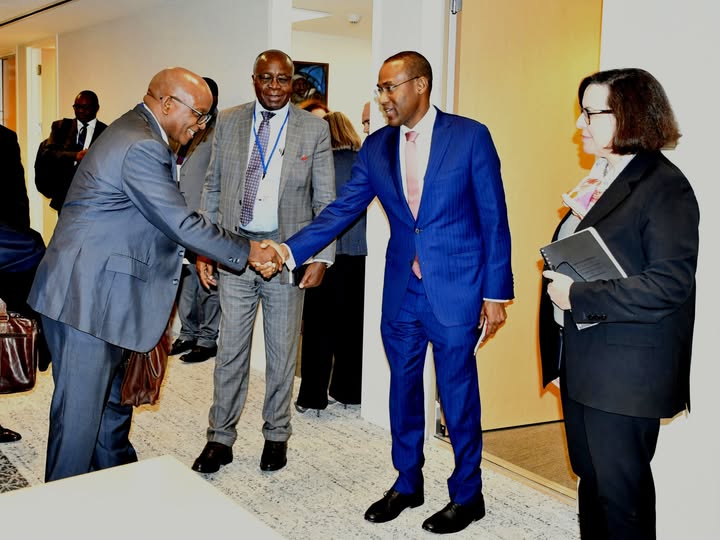
In a statement to the nation, Minister of Finance and National Planning Dr Situmbeko Musokotwane, MP, described the agreement as a timely boost to the economy and evidence that Zambia’s reform path is delivering tangible and credible results.
Dr Musokotwane commended President Hakainde Hichilema and Cabinet for providing consistent leadership throughout what he described as a demanding reform journey. He also praised the private sector, investors, development partners and Zambian citizens for maintaining confidence and resilience during a period of economic adjustment.
The Minister said the staff-level agreement confirms that Zambia has remained firmly on track under the IMF-supported programme, despite facing both domestic and external shocks.
According to the IMF’s assessment, Zambia has significantly reduced macroeconomic imbalances, strengthened resilience to shocks, and implemented sustained fiscal consolidation while protecting social spending and rebuilding international reserves. Gross international reserves have risen to US$5.2 billion, equivalent to about five months of import cover.
The IMF projects that Zambia’s economy will grow by 5.2 percent in 2025, supported by agriculture, improved electricity generation and steady investment. Growth is expected to average 5.6 percent between 2026 and 2031, driven by expanding copper output, increased investment, improved power supply and robust agricultural production.
Inflationary pressures are easing gradually, supported by a stronger kwacha, lower fuel prices and improved food supply, while inflation is expected to converge towards the 6–8 percent target band by 2027.
On the fiscal front, the IMF has acknowledged strong performance, with a primary surplus projected at 1.9 percent of GDP in 2025 and revenues expected to reach 22.6 percent of GDP. The Government has reaffirmed its commitment to maintaining fiscal discipline, managing debt prudently and prioritising social spending.
Dr Musokotwane said reforms across key sectors are continuing, including in energy, agriculture, mining, infrastructure and public financial management, with a strong emphasis on crowding in private investment and strengthening governance of state-owned enterprises.
He also highlighted the social dimension of the reform programme, noting continued prioritisation of health, education and social protection. As part of this commitment, the Government has provided for the recruitment of 3,000 health workers in 2026.
The positive IMF assessment is reinforced by recent sovereign credit rating upgrades by Standard & Poor’s and Fitch Ratings, which have returned Zambia to the B-category with stable outlooks, reflecting improved macroeconomic stability, progress on debt restructuring and stronger growth prospects.
Looking ahead, Dr Musokotwane said the upcoming 2026 National Budget will translate reform commitments into concrete action, anchored on fiscal discipline, debt sustainability, private sector-led growth and protection of vulnerable households.
He announced that in January 2026, the Ministry of Finance and National Planning, together with the Bank of Zambia and the Zambia Revenue Authority, will convene a National Townhall Meeting to engage citizens and stakeholders on economic performance and the outlook for 2026.
“Zambia’s recovery is real, but it must be consolidated,” Dr Musokotwane said, reaffirming Government’s commitment to reforms that deliver stability today and shared prosperity in the future.
The Minister added that, having achieved all milestones under the ECF programme, Zambia now looks forward to the next phase of engagement with the IMF, focused on deeper structural reforms to unlock sustained private sector-led growth.