
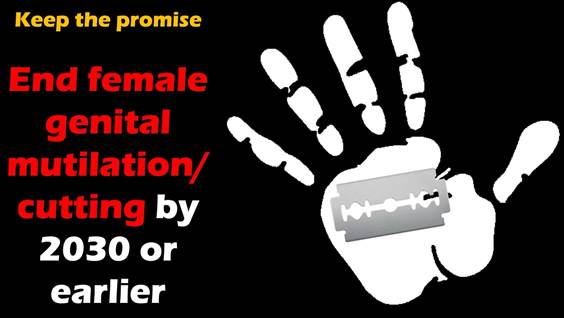
FGM Rates Rise 15% in Eight Years Despite Global Pledge
Despite a global commitment made at the United Nations General Assembly ten years ago to eliminate female genital mutilation/cutting (FGM/C) by 2030, the harmful practice has risen by 15% over the past eight years. Estimates indicate that the number of girls and women affected has increased from 200 million in 2016 to more than 230 million in 2024.
FGM/C remains widespread across 92 countries, with Africa accounting for 144 million cases, Asia 80 million, and the Middle East six million. Experts warn that without urgent, accelerated action, an additional 27 million girls are at risk of undergoing the procedure by 2030.
“Development justice cannot be achieved when half the population is harmed, silenced, or excluded,” said Dr Huda Syyed, Australia-based researcher and founder of the Sahara Sisters’ Collective. “FGM/C is a human rights violation that directly undermines women’s safety, bodily integrity, and agency.”
The World Health Organization (WHO) classifies FGM/C as a violation of human rights, highlighting that it reflects entrenched gender inequality and discrimination. The practice, nearly always performed on minors, violates children’s rights, the right to health, physical integrity, and freedom from torture or degrading treatment. In severe cases, it can even result in death.
Medicalisation of FGM/C, in which procedures are carried out by healthcare workers, remains a concern. Dr Syyed stressed that such practices violate medical ethics and compromise bodily autonomy, noting that young girls are often misled about the procedure.
FGM/C offers no medical benefits. Immediate health risks include severe pain, haemorrhage, infections, urinary complications, and even death, while long-term effects can involve reproductive issues, psychological trauma, sexual difficulties, and childbirth complications.
The economic impact is also significant, with treatment of FGM-related complications estimated to cost global health systems US$1.4 billion annually.
“Ending FGM/C is central to achieving gender equality, human rights, and the Sustainable Development Goals,” Dr Syyed said. “Patriarchal norms that normalise control over women’s bodies must be challenged if we are to protect girls and young women worldwide.”
With just five years left to meet SDG target 5.3, advocates are calling for urgent action, accountability, and community-led efforts to eliminate FGM/C and safeguard the rights and health of girls and women globally.