Zambia Pushes Women’s Role in Peace and Security
Zambia has reaffirmed its firm commitment to the implementation of United Nations Security Council Resolution 1325 on Women, Peace and Security, emphasising the central role of women in building sustainable peace and security.
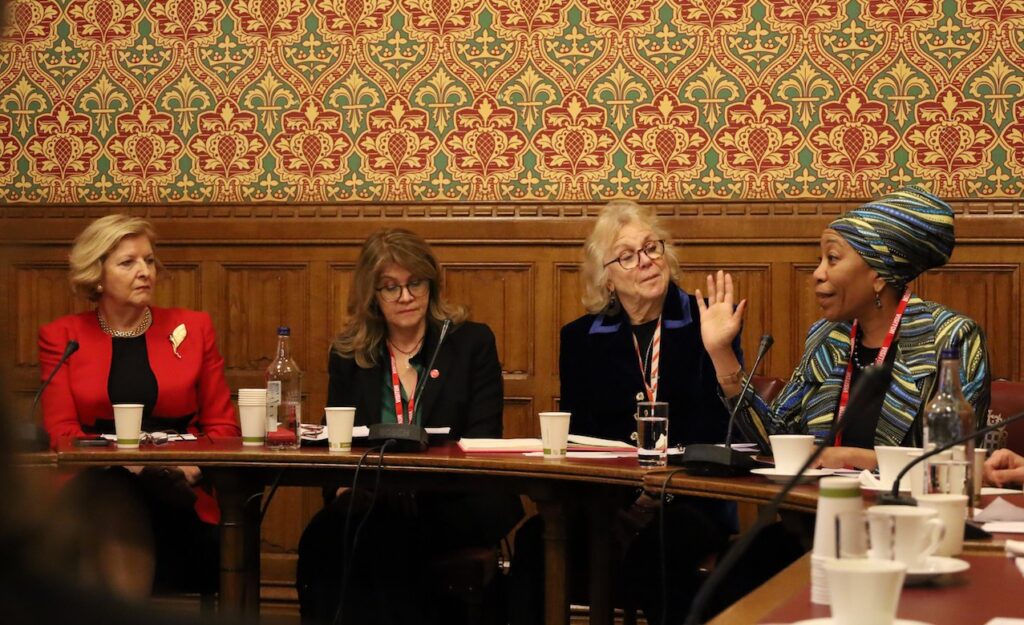
Speaking at the House of Lords in London during a roundtable meeting of the All-Party Parliamentary Group on Women, Peace and Security and Women in Diplomacy, Zambia’s High Commissioner to the United Kingdom, Ms Macenje Mazoka, said the country remains fully aligned with the principles and objectives of the landmark resolution.
Adopted in October 2000, Resolution 1325 recognises the importance of women’s participation in conflict prevention, peacebuilding and post-conflict reconstruction, while calling for the protection of women’s rights and their meaningful inclusion in peace processes at all levels.
Ms Mazoka noted that more than 100 countries had adopted National Action Plans to advance the Women, Peace and Security agenda by 2025, reflecting growing global recognition that inclusive peacebuilding delivers more effective and sustainable outcomes.
“Peace and security efforts are more legitimate, effective and durable when women participate meaningfully at every level,” she said.
The High Commissioner highlighted Zambia’s progress towards finalising its first National Action Plan on Women, Peace and Security, which is expected to be launched in 2026 with the support of United Nations partners and national stakeholders. The plan will outline national priorities and establish coordination, monitoring and accountability mechanisms to guide implementation.
She also outlined practical measures being taken to increase women’s participation in the security sector, including the introduction of gender-responsive accommodation and childcare facilities at the Geoffrey Mukuma Training Centre. The facilities were established with support from Canada through the Elsie Initiative and the United Nations Development Programme to enable more women police officers to access pre-deployment training for peacekeeping missions.
Ms Mazoka said Zambia has recorded a steady increase in the number of women deployed on peacekeeping missions, particularly within the police service, which continues to lead national deployments.
At the regional level, she noted that women across the Southern African Development Community are increasingly represented in parliaments, cabinets, mediation teams, judicial institutions and peace and security structures, contributing to improved governance and regional stability.
She further highlighted ongoing regional initiatives aimed at harmonising legal frameworks, strengthening responses to gender-based violence and expanding women’s economic participation in post-conflict recovery.
“Economic security is a fundamental pillar of lasting peace,” Ms Mazoka said, adding that the next phase of the Women, Peace and Security agenda must focus on measurable improvements in women’s lives, driven by sustained investment in protection and participation.
The High Commissioner reaffirmed Zambia’s willingness to deepen cooperation with regional and international partners, including Chile, Slovenia, the Maldives and the United Kingdom, to share best practices and support women peacebuilders globally.
The roundtable was co-sponsored by the Embassies of Chile and Slovenia and featured contributions from senior diplomats and officials, including H.E. Ximena Fuentes, H.E. Darja Bavdaž Kuret and Dr Iruthisham Adam.
The meeting was hosted by Baroness Fiona Hodgson, who highlighted funding constraints, emerging security threats and climate-related risks as ongoing challenges to advancing the Women, Peace and Security agenda.