
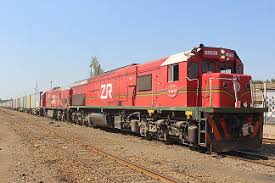
Zambia Injects K100 Million Into Rail Revitalisation Efforts
Zambia has taken a decisive step towards modernising its transport and logistics sector with the release of K100 million to Zambia Railways Limited (ZRL), marking the beginning of a long-term recapitalisation effort aimed at lowering transport costs, boosting trade competitiveness and supporting economic transformation.
In a detailed commentary, Minister of Finance and National Planning Dr Situmbeko Musokotwane explained that the investment is part of the Government’s broader strategy to remove structural barriers that have undermined growth for decades—chief among them the high cost of transporting bulk cargo across long distances.
The recapitalisation funding, released in November 2025, is complemented by over €50 million from the European Union’s Railway Sector Support Programme. This support will finance essential works including track rehabilitation, modern signalling, and improved telecommunications along critical sections of the main line.
Dr Musokotwane said the combined domestic and external support is expected to move Zambia Railways “from survival to transformation”, aligning with the Eighth National Development Plan and the 2026 National Budget which place modern, integrated logistics systems at the centre of export competitiveness and job creation.
For decades, ZRL has grappled with ageing locomotives, worn-out wagons, inadequate passenger coaches, outdated signalling, and deteriorated track infrastructure—factors that have slowed operations, reduced reliability and pushed freight onto congested road networks. The new investment is expected to address these long-standing challenges.
Improvements will be most visible along the traditional line of rail, spanning the Copperbelt through Central and Lusaka Provinces and into Southern Province. Enhanced freight capacity is set to reduce transport costs for mining firms moving copper and other minerals to regional ports, complementing developments along the Lobito Corridor.
Agricultural producers in key districts stand to benefit from more predictable logistics for crops such as maize, sugar, horticultural products and livestock. Industrial centres in Ndola, Kitwe, Kabwe, Kafue and Lusaka will gain more efficient routes for both raw materials and manufactured goods. Livingstone, the country’s tourism gateway, is also expected to see improved passenger and freight services.
The revitalisation of ZRL is projected to enhance Zambia’s competitiveness along regional corridors, strengthening trade links with Zimbabwe, Botswana, Namibia and South Africa, while improving Zambia’s role within the North–South and Lobito Corridors.
Beyond logistics, the minister noted that new economic activity is expected to emerge along the line of rail, including warehousing facilities, logistics firms, cold-chain services and light manufacturing. Local contractors will be engaged in civil engineering, track works, equipment maintenance and related services, supporting job creation and SME growth.
The Government has committed to ensuring that both the recapitalisation funds and EU support are managed with strong governance, commercial discipline and measurable performance benchmarks. ZRL will also be required to deepen collaboration with the private sector, mining companies and agricultural producers, while exploring opportunities for public–private partnerships.
Dr Musokotwane emphasised that the ultimate goal is to build a modern logistics backbone that reduces the cost of doing business and positions Zambia as a competitive, land-linked transit hub for Southern and Central Africa.
“By investing today in Zambia Railways, we are lowering the cost of doing business tomorrow and opening new markets for our citizens,” he stated.