AfDB Backs Namibia’s $10bn Green Hydrogen Project
The African Development Bank (AfDB) has approved a $10 million loan to Hyphen Hydrogen Energy, marking a major step toward the development of one of Africa’s most ambitious green hydrogen projects.
The funding, drawn from the Sustainable Energy Fund for Africa (SEFA), will support front-end engineering and design work for a large-scale green ammonia initiative valued at more than $10 billion.
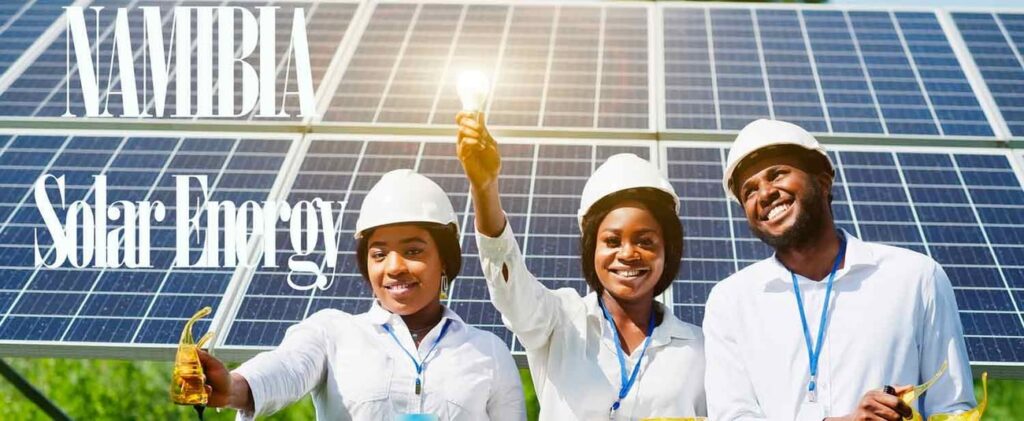
The project aims to position Namibia as a global frontrunner in the emerging green hydrogen economy by leveraging its exceptional solar and wind resources. SEFA’s support will help de-risk the development and attract further investment for renewable energy generation, battery storage systems, desalination infrastructure and electrolyser capacity.
The first phase includes 3.75 GW of renewable energy capacity, 1.5 GW of electrolysers, large-scale storage, and new pipelines, transmission lines and port upgrades. Once operational, the project is expected to produce 2 million tonnes of green ammonia annually for export, while delivering significant socio-economic benefits under a 40-year concession agreement.
Environmental gains are also substantial: the project will avoid an estimated 5 million tonnes of CO₂ emissions per year, equivalent to removing one million cars from the road and will generate 7.5 GW of clean power, over ten times Namibia’s current installed capacity. It will also supply 3 million litres of desalinated water daily to the drought-prone Lüderitz region.
Moono Mupotola, AfDB Country Manager for Namibia, said the project showcases Africa’s potential to lead the global energy transition. “This is about demonstrating Africa’s capacity to create prosperity while protecting the planet,” she noted.
Hyphen CEO Marco Raffinetti welcomed the funding as a strong vote of confidence in the project and Namibia’s broader ambitions. Daniel Schroth, AfDB’s Director for Renewable Energy and Energy Efficiency, described SEFA’s involvement as catalytic, helping to unlock billions in additional financing.
The project is expected to create 15,000 construction jobs and 3,000 permanent roles, with 90% reserved for Namibians and 20% specifically for young people, in a country where youth unemployment remains high.
Regarded as a flagship of Namibia’s Southern Corridor Development Initiative, the project is anticipated to inspire similar large-scale green energy developments across Africa.