AfDB Approves $1.78 Billion Strategy to Transform Namibia’s Economy
The African Development Bank Group (AfDB) has approved a landmark $1.78 billion Country Strategy Paper (CSP) for Namibia, setting the stage for major economic transformation, job creation, and inclusive growth from 2025 to 2030.
The strategy is designed to help Namibia address long-standing structural challenges, including high levels of inequality, youth unemployment exceeding 40 percent, and declining per capita income, which has fallen from $5,942 in 2012 to $4,240 in 2024. These pressures have been compounded by shifts in global trade and reductions in international development assistance.
Moono Mupotola, the AfDB’s Deputy Director General for Southern Africa and Country Manager for Namibia, described the newly approved strategy as a turning point for the country. She said the focus on infrastructure and human capital development would lay the foundations for more inclusive growth that supports all Namibians, especially the younger population.
The CSP focuses on two primary areas. The first priority is investment in transport, energy, and water infrastructure. These developments are expected to reduce business costs, enhance productivity, and position Namibia as a competitive regional logistics hub. The infrastructure upgrades will also strengthen trade under the African Continental Free Trade Area, support renewable energy expansion, and improve rural access to clean water and sanitation services.
The second priority centres on strengthening human capital and supporting entrepreneurship. The Bank will invest in technical and vocational training tailored to labour market needs, support the growth of micro, small, and medium enterprises (MSMEs), and promote women’s economic empowerment. These efforts are intended to diversify the economy beyond mining and agriculture, integrate MSMEs into value chains, and bolster manufacturing capacity, ultimately creating thousands of direct and indirect jobs.
Infrastructure improvements under the strategy are expected to significantly expand electricity access, increasing coverage from the current 59.5 percent toward universal access. The plan also supports Namibia’s ambitions to become a continental leader in green hydrogen production, further strengthening its position in the global green energy transition.
Mupotola noted that recent economic pressures, including U.S. tariff hikes and cuts to development assistance, have intensified the need for a resilient and diversified economy. She emphasised that the new strategy would help Namibia expand its export markets, deepen regional integration, and strengthen domestic productive capacity.
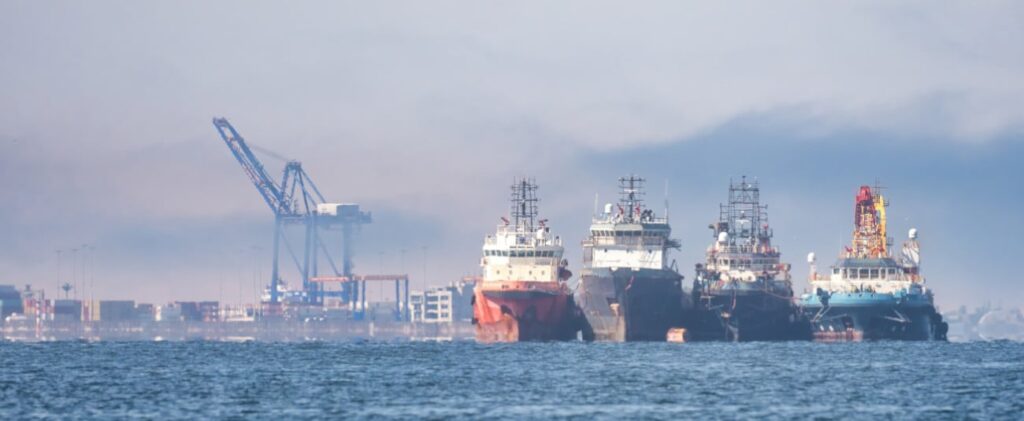
The AfDB’s renewed support builds on more than a decade of partnership with Namibia, during which the Bank has invested $658.1 million in projects such as the expansion of Walvis Bay Port, major railway upgrades, and the construction of 27 educational institutions across all 14 regions.
Aligned with Namibia’s Vision 2030, the Bank’s Four Cardinal Points, and the African Union’s Agenda 2063, the new strategy takes effect immediately. The first programmes under the 2025–2030 CSP are expected to commence in early 2026.
Dane van Niekerk Postpones Retirement to Guide Proteas’ New Generation
South Africa Women’s cricket star Dane van Niekerk has postponed her retirement plans and is set to return to the national team, potentially making her second debut against Ireland in the upcoming series at Newlands Cricket Ground.
The series, beginning this Friday at 2pm SA time, will feature three T20 internationals followed by three One Day Internationals (ODIs).
Van Niekerk’s return comes after a challenging period, including being left out of the 2023 ICC Women’s T20 World Cup squad due to failing a fitness test, and a subsequent announcement of retirement.
Discussions with coach Mandla Mashimbyi convinced her to continue representing South Africa, with the T20 series forming a key part of preparations for next year’s ICC Women’s T20 World Cup.
“If you asked me six months ago, I probably wouldn’t have thought I would be here,” Van Niekerk said. “That kind of fuelled my fire to come back and give it one more go. I am not 18 anymore, so it’s probably my last shot, and I would be stupid not to take it. I am proud of the strides I have made, and hopefully I can help the team.”
The 32-year-old former captain brings more than her playing ability to the squad. Her experience will be vital in mentoring younger players, although she is not focused on reclaiming a leadership role.
“I do not think about captaincy anymore; Sune (Luus) and Laura (Wolvaardt) have done a great job. But I am always here for tactical guidance when needed,” Van Niekerk explained.
Since returning to domestic cricket with Western Province, Van Niekerk has seen the Proteas evolve into a youthful and professional squad. “There is a lot of youth around, a lot has changed, and the management and intensity have increased, which comes with evolving the sport,” she said.
South Africa aims to leverage Van Niekerk’s leadership and experience to build a competitive squad for the T20 World Cup next year, while continuing the development of the next generation of players.