
Zambia Strengthens Animal Health and Fights Antimicrobial Resistance
Zambia is stepping up efforts to strengthen its animal health systems and curb the rising threat of antimicrobial resistance (AMR), with major progress highlighted at the 3rd Annual One Health Scientific Symposium held in Mansa, Luapula Province.
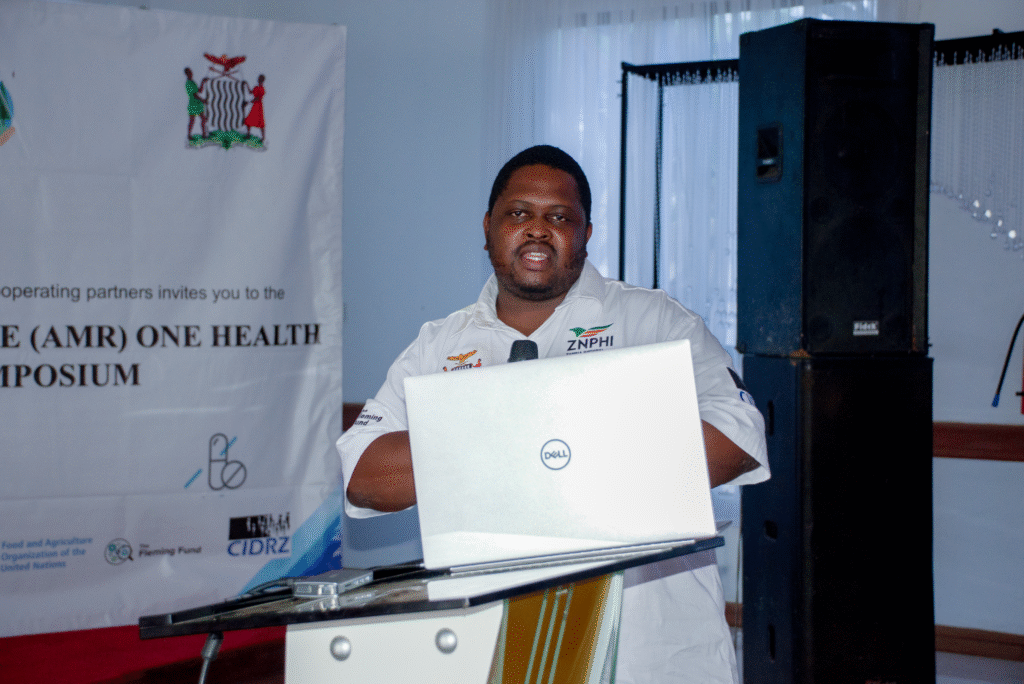
Speaking during the event, CIDRZ’s Mwendalubi Hadunka outlined key achievements delivered through the Fleming Fund Country Grant (FFCG), implemented by the Centre for Infectious Disease Research in Zambia (CIDRZ) in partnership with the Zambia National Public Health Institute (ZNPHI), and supported by the regional AMROH ESA grant.
Mr Hadunka revealed that the grants have introduced four transformative tools reshaping veterinary practice across the country: the Essential Veterinary Medicines List (EVML), Standard Treatment Guidelines for Beef and Dairy Cattle, and two comprehensive Antimicrobial Stewardship (AMS) curricula for veterinarians and veterinary paraprofessionals.
He noted that the EVML, developed through broad multisectoral collaboration, provides a national reference for essential veterinary medicines. Aligned with guidance from the World Organisation for Animal Health (WOAH), the list is expected to strengthen medicine procurement systems, improve rational drug use, and support consistent service delivery within the livestock sector.
The Standard Treatment Guidelines for Beef and Dairy Cattle, meanwhile, offer evidence-based protocols for managing priority cattle diseases. Produced with input from veterinarians, livestock experts and field professionals, the guidelines address diseases of national economic importance and management-related conditions, helping harmonise treatment approaches and promote prudent antimicrobial use.
Mr Hadunka added that the new AMS curricula mark a significant step forward for capacity-building. The veterinary curriculum focuses on diagnostics, AMR awareness, and responsible prescribing—responding directly to gaps identified in the 2023 WOAH Performance of Veterinary Services (PVS) assessment. The paraprofessional curriculum emphasises early disease detection, appropriate medicine use, farmer engagement, and infection prevention and control.
“These tools represent a major milestone in Zambia’s AMR response,” he said, stressing that they enhance governance, strengthen stewardship, and improve livestock health service delivery nationwide.
Mr Hadunka concluded that the progress reflects Zambia’s firm commitment to the One Health approach, safeguarding communities today while building a more resilient and sustainable future for the country’s animal health systems.